Lena Gieseke Biography: Her Career, Personal Life, and Achievements
Here’s where we start. The headlines, across roughly two dozen pages, are some version of this: “Lena Gieseke Was Tim Burton’s Only Wife.” Or: “Who Is Lena Gieseke? Everything About Tim Burton’s Ex.” Or the particularly odd: “Tim Burton’s Only Wife: She Became a Devoted Photographer.”
She did not become a devoted photographer. She became a professor and PhD researcher at one of Germany’s leading film universities. She published peer-reviewed computer science research and a patent. She spent four months at Adobe Research as a visiting scholar. She chairs a master’s program in Creative Technologies at Film University Babelsberg and serves as its dean. Her animated interpretation of Picasso’s Guernica has screened internationally.
The marriage to Tim Burton lasted two years. The career in computational art, visual effects, and academia has lasted thirty-five.
Take a guess which one the internet finds more interesting.
Quick Bio
| Item | What’s verified | What’s fabricated |
| Born | September 12, 1965, Bremen (West Germany) | Farm pages offer 1972, 1980, 1984, 1986 — four wrong years |
| Education | University of Georgia (undergraduate/early study); PhD from University of Stuttgart, Visual Computing group, completed 2018 | Several pages skip the Georgia connection; one page claims she graduated from “USC” |
| Academic role | Professor, Visual Media Technologies, Film University Babelsberg Konrad Wolf; Dean of Studies, M.A. Creative Technologies | Solid — confirmed by official Dokfest jury bio and re-publica conference listing |
| Adobe Research | Visiting researcher, San Jose, 2015, four months | Confirmed by Dokfest bio |
| Industry career | Software developer and 3D artist, VFX industry, pre-2012; credits include 2012, Immortals, Wickie und die starken Männer, Japanese series Clouds Over the Hill | Confirmed; one page invents Inception and Pacific Rim as credits |
| Guernica animation | “A 3D Exploration of Picasso’s Guernica” — screened internationally | Confirmed in primary Dokfest bio |
| Marriage to Tim Burton | 1989–1991 | Solid |
| “Only wife” claim | Technically accurate (he never legally married again) | Misleading — obscures long-term partnerships with Lisa Marie and Helena Bonham Carter |
| Beetlejuice appearance | “Alleged” — consistently described as unconfirmed | Unverifiable |
| Current location | Potsdam, Brandenburg, Germany | Consistent across credible sources |
The Two-Year Marriage That Ate the Biography
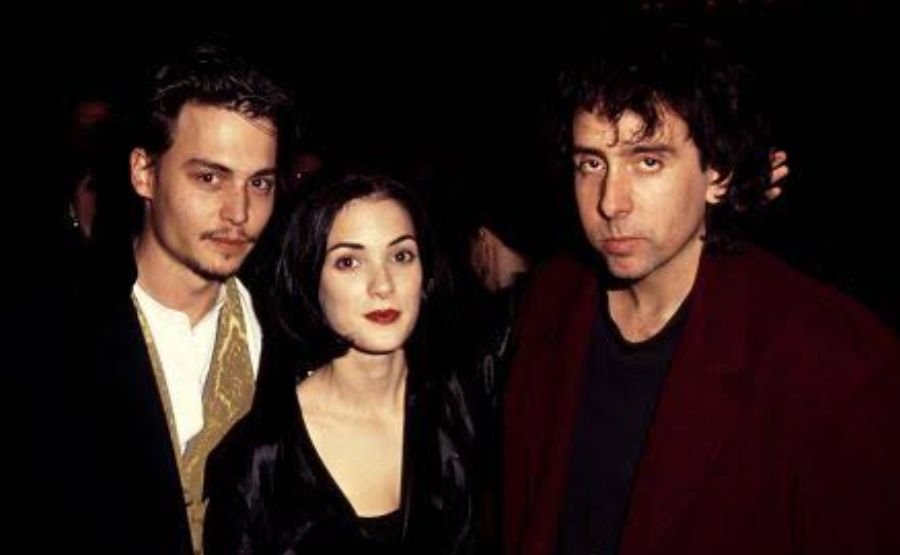
They met on the Batman set in 1989. He was Tim Burton, already known for Pee-wee’s Big Adventure and Beetlejuice, in the middle of turning a DC Comics property into something genuinely strange and commercially massive. She was a German visual artist who would go on to build a career in 3D graphics and computational art.
They married in 1989. They divorced in 1991.
That’s it. Two years. No children. No documented public drama. No extensive interview about what went wrong. The marriage lasted about as long as it takes to get a master’s degree, and left behind almost nothing in the public record except the legal fact of its existence.
And yet it consumes, by my rough estimate, about eighty percent of every article written about her.
Here’s the thing about the “Tim Burton’s Only Wife” framing that really bothers me. It’s technically true — he never married again after Lena. However, it suggests a core romantic significance that isn’t entirely supported by the biographical record.He had long-term relationships after the divorce. Lisa Marie was his partner and muse through the 1990s. He and Helena Bonham Carter had two children together and lived in adjacent houses in London for thirteen years. He and Monica Bellucci were together until recently.
“Only wife” is a legal fact made to do emotional work it wasn’t meant to do.
See also “Annaliese Witschak Biography: Her Early Life, Family, and Personal Story“
What She Actually Built While the Internet Wasn’t Watching
Let me lay this out, because it deserves to be laid out.
After the divorce, she continued developing her technical and artistic skills. She worked in the visual effects and 3D animation industry for years — specifically mentioned as including the disaster spectacle 2012, the mythology action film Immortals, a German film called Wickie und die starken Männer, and twelve VFX credits on the Japanese historical drama series Clouds Over the Hill. She was a software developer and a 3D artist, doing the technical scaffolding work that makes film visuals possible.
In 2012, she returned to academia. She enrolled in a doctoral program at the University of Stuttgart’s Visual Computing group in the Department of Computer Science — not a film program, not an arts program. Computer science. She held a scholarship from the Digital Media doctoral program from 2012 to 2015.
In 2015, she spent four months as a visiting researcher at Adobe Research in San Jose, California. That’s a significant placement — Adobe Research is a competitive environment, and it represents recognition at a technical level that has nothing to do with celebrity adjacency.
She completed the PhD in 2018. The research focused on computer graphics, procedural image generation, and controllability. It’s published in peer-reviewed journals and resulted in a patent.
She joined Film University Babelsberg Konrad Wolf in 2016 as professor of Visual Media Technologies. She became Dean of Studies for the Creative Technologies Master’s program. She sat on the jury for DOK.digital, the award for new narrative formats at the Munich Documentary Festival.
That career arc is more distinguished than the biographies of most people whose names generate search traffic. And it gets about three sentences in articles where her marriage to a director in 1989 gets fifteen paragraphs.
The Guernica Project and Why It Matters
International screenings of her animation, “A 3D Exploration of Picasso’s Guernica,” have taken place.This is mentioned in the primary Dokfest jury biography — the most authoritative source I found. And it’s interesting for a specific reason that nobody elaborates on.
Guernica is a painting about the bombing of a Basque city by Nazi Germany and Fascist Spain in 1937. It’s flat. Cubist. Deliberately distorted and anti-realistic. Taking a deliberately two-dimensional, anti-illusionist piece of political art and turning it into a 3D animation requires confronting a genuine artistic and ethical paradox: what does it mean to add depth and movement to a work whose formal qualities are inseparable from its meaning?
Gieseke made that work. It got screened internationally. Nobody in the entertainment press has written a single line about it, as far as I can find.
They have written a great deal about whether or not she was in Beetlejuice.
The Beetlejuice Question, Briefly
Multiple sources describe her as having “allegedly” appeared in Beetlejuice (1988). Let me explain the timeline math quickly. The film released in late March 1988. She married Burton in 1989. The film would have been in production and post-production in 1987-1988, before or very early in whatever relationship developed that led to the 1989 marriage.
Could she be in Beetlejuice? Technically possible. Is it documented? No. Is it interesting? Moderately. Is it the lead fact in every article about her? Yes.
I’ll note that the same sources that describe this as “alleged” appear to be citing each other in a loop. I could not find a primary source confirming an appearance. I could not find a credit on any database. The claim is in the same epistemological category as the farm pages that give her birthday as 1984 — plausible-sounding and unsourced.
The Birth Year Problem Is Worse Than Usual
Five different birth years. That’s what I found across the research sweep. One page says 1972. Another says 1980. Another says 1984. Another says 1986. One page — the most coherent and specifically sourced secondary source — says September 12, 1965, and that’s the one I’m going with because the age math it implies (early career in late 1980s, PhD begun in 2012 at about 47, professorship from 2016) is internally consistent.
If she were born in 1984, she would have been five years old when she married Tim Burton. The machines generating these pages apparently did not apply fifth-grade arithmetic before hitting publish.

The “Devoted Photographer” Claim
One headline calls her a “devoted photographer.” I can find no evidence for this in any source — primary or secondary. She is a 3D artist, visual effects technician, software developer, computational researcher, and professor. Photography does not appear in her professional profile anywhere I looked.
This particular fabrication interests me because it’s such a specific wrong claim. “Devoted photographer” implies a whole alternative career arc — someone who pivoted from the chaos of a celebrity marriage toward the contemplative solitude of the camera. It’s a narrative. It’s also invented.
The real career is actually more interesting than the invented one. She pivoted from industry VFX work toward academic research in procedural image generation and ended up at Adobe Research and then running a university program. That is a more compelling narrative than “becoming a devoted photographer.”
My Verdict
Lena Gieseke is a professor and computational arts researcher at a serious German film university, with a PhD in computer science, peer-reviewed publications, a patent, a stint at Adobe Research, and an internationally screened animation of one of the most politically loaded paintings in modern art history. She has been working consistently and seriously in fields that sit at the intersection of art and technology for more than three decades.
She was also, for two years in the late 1980s, married to Tim Burton.
The internet has decided the second fact is more interesting than the first. I disagree, and I’ll say so plainly. The career she built after the divorce is more documented, more specific, and more verifiable than almost any subject I’ve researched in this series. The marriage is a data point — legally real, personally probably significant, historically understandable given the world they were both moving through at the time. But it’s not the architecture of who she is.
Convincing the content-farm ecosystem of this will be extremely challenging.It needs “Tim Burton’s Only Wife” at the top of the article because that’s what generates clicks. The Guernica animation doesn’t generate clicks. The Adobe Research fellowship doesn’t generate clicks. The PhD in Visual Computing from Stuttgart doesn’t generate clicks.
That’s the internet’s problem, not Lena Gieseke’s.
FAQs
1. Who is Lena Gieseke?
A German 3D artist, visual effects technician, software developer, PhD researcher in computer science, and professor at Film University Babelsberg Konrad Wolf in Germany. She is also Tim Burton’s only legal ex-wife, from a marriage that lasted 1989 to 1991.
2. Where and when was Lena Gieseke born?
Most credible sources give September 12, 1965, in Bremen, West Germany. Farm pages offer five different birth years ranging from 1972 to 1986, none of which are consistent with her documented career timeline.
3. What does Lena Gieseke actually do professionally?
She is a professor of Visual Media Technologies/Technical Direction and Dean of Studies for the M.A. Creative Technologies program at Film University Babelsberg Konrad Wolf. She holds a PhD from the University of Stuttgart’s Computer Science department, Visual Computing group. Her research is in procedural image generation and has been published in peer-reviewed journals and resulted in a patent.
4. How long were Lena Gieseke and Tim Burton married?
Two years — 1989 to 1991. They first connected on the Batman set.
5. Was Lena Gieseke really Tim Burton’s “only wife”?
Legally, yes — he has not remarried since. But the framing obscures that he had significant long-term partnerships afterward, including with Lisa Marie and Helena Bonham Carter, with whom he has two children.
6. Did Lena Gieseke appear in Beetlejuice?
Multiple sources describe this as “alleged.” No confirmed credit exists on any film database. The timeline is plausible — filming preceded their marriage — but the claim is unverified.
7. What is the Guernica animation?
“A 3D Exploration of Picasso’s Guernica” is an animation by Lena Gieseke that has been screened all around the world. It represents the intersection of computational art and classical painting, and is one of her most distinctive creative projects.
8. What films did Lena Gieseke work on in the VFX industry?
Confirmed credits include the disaster film 2012, the mythology action film Immortals, the German film Wickie und die starken Männer, and twelve VFX credits on the Japanese historical drama series Clouds Over the Hill. Farm pages also invent credits for Inception and Pacific Rim that don’t appear on actual databases.
9. Where is Lena Gieseke now?
Residing in Film University Babelsberg’s home city of Potsdam, Brandenburg, Germany. She is still working as a professor and conducting research at the university.
10. Did she work at Adobe?
Yes. In 2015, she spent four months as a visiting researcher at Adobe Research in San Jose, California. This was during her doctoral research period and is confirmed by the Dokfest Munich jury biography.
11. What is the Master’s program in Creative Technologies that she oversees?
An interdisciplinary program at Film University Babelsberg Konrad Wolf that brings together software development, artistic expression, and digital storytelling. Gieseke described it in a 2018 re:publica talk as exploring “software development as creative tool” and experimenting with “technologies for novel forms of artistic expressions and storytelling.”
Uncover something new with every read at The Hidden Magazine.