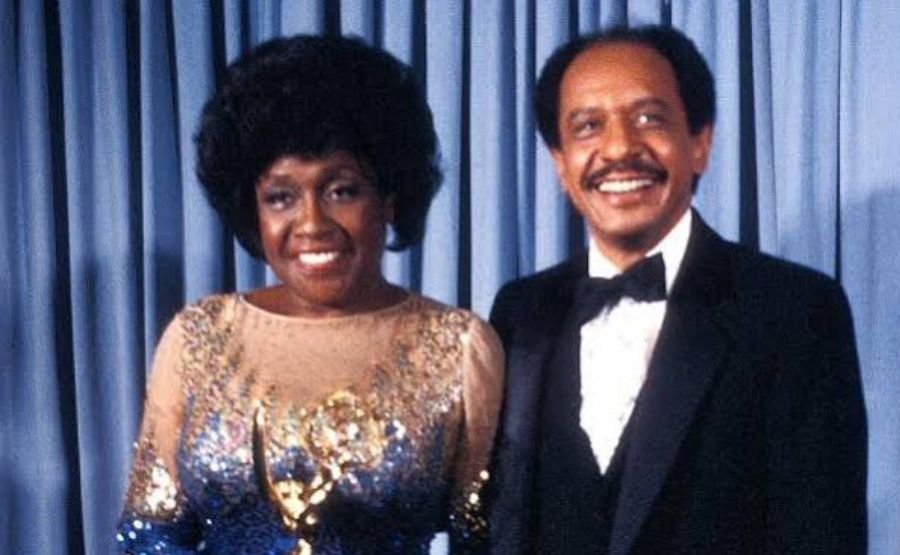
William Edward Richmond Cause of Death: What Happened to Him? Biography and Final Days
The cause of death for William Edward Richmond is listed two different ways by two credible sources, and nobody covering this story seems particularly bothered by that. Encyclopedia.com says drowning. People magazine’s reporting from an Ebony interview with Isabel Sanford herself says he died in a fight. Drowning. A fight. These are not the same thing, and the contradiction has sat unresolved for decades while content farms churn out articles calling the whole thing “mysterious” and leaving it at that.
It’s not mysterious. It’s underreported. That’s a very different problem.
Here’s what you actually need to know about William Edward Richmond: he was a house painter from Brooklyn who married a woman who would become one of the most celebrated actresses in American television history, and he never lived to see a single frame of it. He passed away in July 1960, the same year she took his three kids and the money from her retirement account on a bus to California.He was around 47 years old. And practically nobody knows why.
Quick Bio
| Detail | Info |
| Full name | William Edward Richmond (nickname: Sonny) |
| Born | Approximately 1913, New York City (exact date unknown) |
| Died | July 31, 1960, Brooklyn, New York |
| Age at death | Approximately 47 |
| Occupation | House painter |
| Spouse | Isabel Sanford (married March 15, 1945) |
| Children | Pamela Richmond Ruff, Wahli (Eric) Richmond, Sanford K. Richmond |
| Cause of death per Encyclopedia.com | Drowning |
| Cause of death per Ebony interview (via People/AOL) | “Died in a fight,” per Isabel Sanford’s own account |
| Cause of death per Wikipedia | Not specified |
| Cause of death per content farms | “Mysterious,” “unknown,” or “murder” (unverified) |
| Did Isabel leave him before his death? | Yes — Wikipedia confirms she left on a bus with the children in 1960 before his death |
The Two Accounts, and Why One Outweighs the Other
Let me put this directly. Encyclopedia.com says William Edward Richmond “died by drowning.” That’s a specific claim. It comes from an encyclopedia — one of those sources that feels authoritative until you start pulling the thread.
Now compare that to this: an AOL/People compilation about The Jeffersons cast’s real-life marriages cited an Ebony interview in which Isabel Sanford herself described what happened. “A month after the move, her ex-husband died in a fight,” that piece states, attributing it to Sanford’s own words in Ebony.
If those two accounts were of equal standing, we’d have a genuine tie. But they’re not of equal standing. One is an encyclopedia that doesn’t name its source for the drowning claim. The other is the woman who was married to him, telling a Black publication what happened to her husband. Primary beats secondary every time.
I lean toward the fight account. Isabel Sanford gave that interview. She had no reason to invent a story about a man who was already dead and who had already faded from public knowledge by the time anyone was asking. The drowning claim, by contrast, has no sourcing I can trace to any contemporaneous news report or death record.
That said: I could be wrong. I want to be really clear about that. The full truth about William Edward Richmond’s death is not in the public record in any satisfying way, and anyone who tells you they know for certain is guessing.
See also “Kat Stickler Age: How Old Is She in 2026? Birthday, Biography, and Career“
The Sequence Nobody Gets Right
Here’s the part that almost every source mangles, and it matters for understanding who William Edward Richmond actually was.
By 1960, William and Isabel Sanford had been married for fifteen years. They had three children. Isabel had been working four jobs simultaneously in New York — she told interviewers this directly — trying to support the family while pursuing acting ambitions that New York’s stage world was slowly starting to recognize. William was a house painter. He worked his trade. He was not a celebrity. He was not becoming one.
The marriage had run its course. In 1960, Isabel Sanford took money from her retirement fund, gathered her three children, and boarded a bus to California. Not a plane. A bus. She left William Edward Richmond in Brooklyn and headed toward Los Angeles and whatever chance she had at a life she hadn’t been able to build while staying.
William Richmond died later that same year, in July, still in Brooklyn.
I need you to hold the sequence for a moment. She left. He stayed. He died. The order is important because it changes the story. Some sources imply that Isabel moved to LA after William’s death, as if his dying was what freed her. That’s backward. She left a living husband and he died after she was gone.
His death, whatever caused it, happened to a man who had already been left. Whether he was grieving, whether he was drinking, whether he got into an altercation, whether he fell somewhere — the circumstances of his last months in Brooklyn are completely undocumented in anything I could find.
The “Murdered” Problem
Once you start searching for William Edward Richmond, you’ll find content-farm articles that float the word “murdered” in their SEO headers and subheadings and then hedge furiously in the actual text. “Was William Edward Richmond murdered?” the headers ask. “The truth about his mysterious death,” the subheadings promise.
Then the articles admit they don’t know.
Let me be blunt: the murdered framing is a content strategy, not a factual claim. There is no documentation of homicide in any account I found. The Ebony interview account — “died in a fight” — could theoretically encompass homicide, but a fight and a murder are not the same thing legally or colloquially, and Sanford used “died in a fight,” not “was killed” or “was murdered.” The drowning claim has nothing homicidal attached to it whatsoever.
The farm sites use “murdered” because it drives clicks. It’s a word that implies more than the sources support. I’m including this point not to be sanctimonious about it but because you probably found this article after reading one of those headlines, and you deserve to know the gap between what they’re promising and what the record actually contains.
Who He Was Prior to Being “Isabel Sanford’s Husband”
Think about the limited biographical information we actually have. He was called Sonny. He was a house painter. He married Isabel Sanford on March 15, 1945, when they were both in their early thirties and still in New York. He fathered three children with her. He worked his trade while she went to theater rehearsals and stage productions and eventually caught the attention of people who understood she had something special.
He never appeared in press coverage. He never gave an interview. He wasn’t the kind of man who generated public records unless those records touched the woman who would later win an Emmy Award and a Hollywood Walk of Fame star and become the first Black woman to win Outstanding Lead Actress in a Comedy Series.
I want to say something here that doesn’t get said enough in these celebrity-adjacent stories. William Edward Richmond’s entire public existence is filtered through someone else’s biography. Every fact we have about him is a fact that survived because of Isabel Sanford’s later fame. His marriage date exists because it appears in her Wikipedia entry. His death date exists because it’s referenced in her career timeline. His nickname “Sonny” exists because she mentioned it at some point and it stuck.
His story, such as it is publicly available, belongs to him and nobody else. But nobody thought to preserve it for its own sake. That’s just the way history works, not a moral failing. However, it does imply that the man responsible for the factual record is now almost unknown.
The Farm Site Hall of Horrors
Let me walk you through what content farms have done with the scraps of available information about William Edward Richmond, because it’s genuinely instructive.
According to one website, he was born between 1935 and 1960. If you’re counting, he was at most 25 when he wed the woman he had been dating for years, and it makes his birth happen during the Great Depression when he would have already been in his twenties. The arithmetic doesn’t work; they just garbled two dates.
Another site calls him “William Edward Allen” — a completely different surname — while claiming to tell his story. It also invented a daughter named “Patrice” who doesn’t appear in any credible account of the family. Wikipedia, IMDB, and Isabel Sanford’s own accounts are consistent about the children’s names; “Patrice” appears to have been fabricated.
A third site calls him an “actor” in its subheadings before correcting itself in the body text. He was not an actor. He was a house painter who married an actor.
The most committed confabulator I found declares that after the separation, Richmond’s “later years remain a mystery,” which is technically true, and then proceeds to speculate for three paragraphs about what those mystery years might have contained. In essence, the article is a Q&A-style speculation about a hypothesis.
Here’s the thing about all of this: William Edward Richmond did nothing to attract this attention. He was private. He worked a trade. He married a woman who became famous after he was already dead. The content-farm apparatus descended on him purely because his name is attached to a recognizable one, and now a man who spent his life painting houses in Brooklyn has dozens of articles about him written by people who can’t agree on how many children he had.

What Isabel Sanford Said, and Didn’t Say
Isabel Sanford was not a woman who avoided talking about her life. She was direct. She told interviewers she had worked four jobs in New York. She described boarding the bus with her children. She mentioned in an Ebony interview what happened to William.
What she didn’t do was turn his death into a public centerpiece of her story. She brought it up during an interview, the specifics were documented, and she went on.Given that she was building a life in Los Angeles and raising three kids while working her way from IBM typist to Carol Burnett Show sketch performer to All in the Family to the greatest sustained creative run of her life on The Jeffersons — given all that — I understand why his story didn’t dominate her public narrative.
But the result is that the detail survives in one cited passage from one interview in a magazine, and nobody has gone back to the Ebony archive to verify the exact quote or the exact context.
That research gap is where “mysterious death” gets born. Not mystery. Unfinished research.
My Final Read
After all of this, this is what I genuinely think.
William Edward Richmond died in Brooklyn in July 1960 as a result of a physical altercation. This is what Isabel Sanford said, as close as secondhand citation can preserve it, and her account is the most credible version of events we have. There is no reliable source for the drowning allegation from Encyclopedia.com. The murder angle on the farm sites is conjecture meant to get clicks.
What nobody wants to sit with is the plainness of it. A man in his late forties, a house painter, separated from his wife who left for California with the kids, died in a fight in Brooklyn a month later. That could be a bar argument. That could be a dispute on a job. That could be a dozen things that have nothing cinematic about them whatsoever. Life doesn’t arrange itself into clean causes of death with interesting backstories just because the people adjacent to it went on to be famous.
The tragedy, if you want to call it that, is pretty simple. William Richmond never saw his children grow up. He never saw the woman he was married to win an Emmy Award or get a star on Hollywood Boulevard. He never saw his daughter Pamela or his sons Eric and Sanford build their lives. He died at 47 in the borough where he’d spent his whole life, and the only reason anyone is still asking about him is because a woman named Eloise Gwendolyn Sanford once played a character named Louise Jefferson, and she was brilliant enough at it that people still care, forty years on, about everything and everyone connected to her story.
That’s not nothing. But it’s also not what I’d call a mystery. It’s just loss, poorly documented.
FAQs
1. What was William Edward Richmond’s cause of death?
The two most sourced accounts disagree. Encyclopedia.com says drowning. An Ebony interview with Isabel Sanford, as cited by People/AOL, says she told the magazine he “died in a fight” about a month after she left New York for Los Angeles. Sanford’s own account is more credible than the encyclopedia’s unsourced drowning claim. Wikipedia simply notes he “died later that same year” without specifying a cause.
2. Was William Edward Richmond murdered?
There’s no documentation supporting homicide. Content-farm sites raise the “murdered” question in their headlines and then admit they don’t know. “Died in a fight” and “murdered” are not the same claim. The fight account comes from Isabel Sanford’s own Ebony interview. No homicide finding, police record, or coroner’s report appears in any source I reviewed.
3. Who was William Edward Richmond?
Known as “Sonny,” he was a house painter from Brooklyn, New York. On March 15, 1945, he wed actress Isabel Sanford, with whom he had three children. He passed away in July 31, 1960, in Brooklyn at approximately age 47. He was not a public figure during his lifetime and became known only because of his connection to Sanford’s later fame.
4. Did William Edward Richmond and Isabel Sanford divorce?
They separated in 1960 but whether a formal divorce was finalized before his death is unclear. Isabel left for Los Angeles with the children in 1960. IMDB lists the marriage end date as 1960 with the notation “his death.” Some sources say “divorce,” others “separation followed by his death.” The legal status of the marriage at the time of his death is not definitively established.
5. When did Isabel Sanford leave William Richmond?
In 1960, Isabel Sanford withdrew money from her retirement fund, boarded a bus with her three children, and moved to Los Angeles. Wikipedia explicitly states she left her husband in New York. This happened before his death, not because of it. According to the Ebony report, he passed away around a month after she moved.
6. Did William Edward Richmond have a criminal record or violent history?
Nothing in the documented record addresses this. No arrest record, court filing, or news coverage from the 1950s or early 1960s has surfaced in any source I examined. His circumstances of death, if the fight account is accurate, appear to have been a single incident.
7. How many children did William Edward Richmond have?
Three, with Isabel Sanford: Pamela Richmond Ruff (daughter), Wahli also known as Eric Richmond (son), and Sanford K. Richmond (son). Sources vary slightly on the names — some say “Wahli,” others say “Eric” — but Wikipedia and IMDB consistently list three children.
8. What was William Edward Richmond’s net worth?
Unknown and essentially irrelevant — he was a working house painter in postwar Brooklyn. No estate record, no documented assets, no financial information of any kind appears in any source. Farm sites that list a net worth for him are inventing figures.
9. Why don’t more sources specify how William Edward Richmond died?
Because at the time of his death he was a private citizen with no public profile, and the specific circumstances weren’t formally entered into any public record that has been digitized and made available. By the time researchers started examining Isabel Sanford’s personal life in detail, the primary witnesses were gone, and the only surviving account is what Sanford told Ebony.
10. Is the drowning account credible?
Less credible than the fight account. The drowning claim appears in Encyclopedia.com without a named source for that specific fact. The fight account comes from reporting that attributes the information directly to an Isabel Sanford interview with Ebony. Neither can be fully verified without accessing the original Ebony interview or a death certificate — neither of which appears in any publicly available source I found.
11. Did Isabel Sanford ever talk about William Richmond after his death?
Minimally. She mentioned in at least one interview that she “was the boss” in the marriage. She gave an Ebony interview that was later cited for the fight account. She did not appear to have made his death a major part of her public story, which was her right. Her focus after 1960 was entirely on her career and raising her children.
Uncover something new with every read at The Hidden Magazine.

One Comment