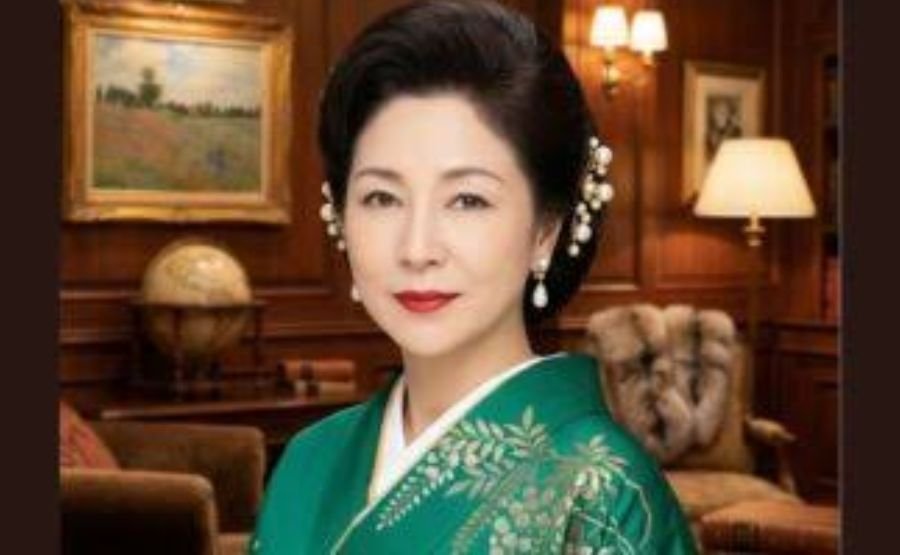
Who Is Yukiye Kitahara? Biography, Family, Personal Life, and Untold Facts
The search results for Yukiye Kitahara generate, roughly in equal measure, a complete absence of information and a collection of total fabrications. One page calls her a “pioneering Japanese feminist and social reformer” who “campaigned tirelessly for women’s suffrage.” Another page describes her as a graphic designer. A third page makes her an actress born in 1991 — which would mean she married Pat Morita at age negative twenty-one.
None of these are the same person. None of them are her.
The actual Yukiye Kitahara is Pat Morita’s second wife. They were married nineteen years — December 28, 1970, to 1989. They had two daughters. She has given exactly zero interviews in her life. The people who could describe her are her daughters and her late ex-husband, and one of them is dead and the other two are private.
That’s the complete record. Everything else is filler.
Quick Bio
| Item | What’s verified | What’s fabricated |
| Identity | Pat Morita’s second wife | One page calls her a feminist reformer; another makes her a graphic designer; another makes her a 1991-born actress |
| Marriage to Morita | December 28, 1970 – 1989 (19 years) | Some sources say “a couple of years” — wrong |
| Children | Two daughters: Tia Morita and Aly Morita | Solid |
| Aly Morita | Actress/personality, somewhat public | Solid |
| Tia Morita | Private, essentially no public presence | Solid |
| Yukiye’s profession | Unknown — never stated in any verifiable source | Invented multiple times by farm pages |
| Age/birth year | Unknown — she would be approximately in her late sixties or seventies based on timeline | One page assigns 1991 — impossible |
| Public statements | Zero | None exist |
| Social media | None confirmed | N/A |
| Pat Morita’s death | November 24, 2005, age 73 | Solid |
The Man She Married — And Why His Story Is All We Have
Pat Morita is one of the more interesting figures in American entertainment history and most people only know him from one role. He was born in Isleton, California, in 1932. He spent his early years hospitalized with spinal tuberculosis, spent the World War II years in Japanese internment camps as a child, and entered adulthood with a background that could have crushed most people and didn’t quite crush him.
He did stand-up comedy. He had bit parts for years. He played Arnold on Happy Days — an early role, a warm one, the kind of thing that builds a career sideways. Then in 1984, The Karate Kid happened and he became Mr. Miyagi and the rest of it followed.
This is the section that receives insufficient attention. Morita had severe alcohol problems for much of his adult life. His third wife Evelyn Guerrero confirmed this. The period when he got the Karate Kid role and the period when his marriage to Yukiye was ending overlap. He married Guerrero in 1991, two years after the divorce from Yukiye was finalized. The documentary record of his sobriety dates to the early 1990s.
I am not connecting those dots as causation. I don’t know the inside of that marriage. But I notice that coverage of Morita’s alcoholism treats it as a Hollywood curiosity and coverage of his marriage to Yukiye treats it as basically nonexistent, and nobody seems interested in reading those two silences together.
See also “Kristin Hodge: Biography, Family, Personal Life, and Untold Story“
The Daughters and the Asymmetry Between Them
Tia and Aly Morita are Yukiye Kitahara’s daughters. Tia is almost entirely absent from the public record — no interviews I found, no social media footprint, essentially nothing. Aly is different. Aly has worked in entertainment. She’s appeared in various credits and made enough public appearances that coverage of Pat Morita’s family at least knows she exists.
What does Aly say about her mother? In the sources I found — which aren’t many, and most are thin — she doesn’t discuss Yukiye at all. Or at least, the coverage doesn’t report her discussing Yukiye. It’s possible she’s said things about her mother that didn’t get picked up. It’s possible she’s protective of her mother’s privacy. It’s possible the questions simply never got asked.
Here’s the thing about the asymmetry. Tia apparently stepped fully out of public life. Aly moved toward it. Both of them had the same parents. Both of them had a mother who, by all appearances, wanted nothing to do with fame or recognition. One daughter followed that instinct completely. The other found a different path. That divergence is genuinely interesting and nobody has written about it because nobody can get access to Yukiye and therefore nobody writes about the family through her lens.
The Nineteen Years
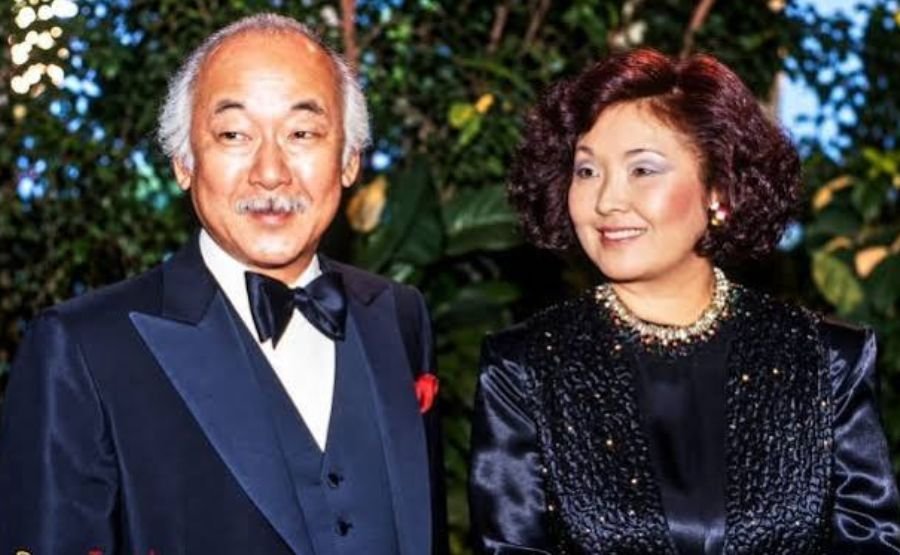
They were married December 28, 1970. Let me be precise about the starting context. That same year, 1970, Pat Morita divorced his first wife Kathleen Yamachi. Meaning: he left one marriage and started another in the same calendar year.
Maybe that says something. Maybe it doesn’t. But Yukiye Kitahara walked into that dynamic — whatever it was — and stayed for nineteen years. Through the lean years when Morita was doing bits and guest spots and Happy Days. Through the 1984 explosion. Through the Karate Kid sequels. Through whatever the personal reality of that household was.
The divorce finalized in 1989. The Karate Kid III came out in 1989. That’s probably coincidence. But his career peak and his second marriage’s ending occupy the same compressed period, and nobody has been willing to untangle them because Yukiye won’t talk.
Let’s be honest. The people who have the most information about Yukiye Kitahara are Tia and Aly Morita. That information hasn’t entered the public record, which is either because they’re protecting her, or because nobody’s asked them specifically, or because Yukiye has made clear that she doesn’t want to be written about.
All three of those possibilities are equally plausible from the outside.
What the Internet Invented Instead
Let me catalog the fabrications because they’re illuminating.
The inrae.fr page turned her into a different person entirely — a “pioneering Japanese feminist, writer, and social reformer” who “campaigned tirelessly for women’s suffrage in Japan.” None of that is Yukiye Kitahara. It’s a hallucination that grabbed the name and filled it with a history that belongs to a 19th and early 20th-century figure — the women’s suffrage movement in Japan predated Yukiye’s birth. The machine knew “Japanese woman” and “significant figure” and assembled something plausible-sounding from historical Japanese women’s activism.
The 1991 birth date is straightforwardly absurd. It would not have been possible for a woman born in 1991 to be Pat Morita’s wife in 1970.The machine grabbed a plausible birth year for a young actress and attached it.
The “graphic designer” version of Yukiye is Kristin Hodge — Jon M. Chu’s wife. Same occupation, completely different person, somehow the machine made the swap.
This is a specific kind of informational failure. When the real person provides nothing, the machine doesn’t stop — it keeps generating, borrowing from adjacent searches, attaching descriptions from unrelated women to the available name. The result is three or four entirely different Yukiye Kitaharas that don’t resemble each other and don’t resemble the actual woman.
The Silence as Information
I want to push on the silence itself, because I think it’s the most honest thing the record offers.
Pat Morita, by the accounts of people who knew him and worked with him, was a complicated person. Warm and funny in the way many performers are, but also carrying real weight — the internment, the illness, the alcoholism, the years of being underestimated in an industry that didn’t know what to do with a Japanese-American comedian. His third wife Evelyn Guerrero gave interviews. His daughters have appeared in public. His story has been told.
Yukiye has been silent through all of it. She gave him two daughters. She stayed for nineteen years. She left before the alcoholism crisis peaked, based on what can be inferred from the timeline. She took nothing from the public record when she exited.
That’s not nothing. Choosing genuine privacy in a media ecosystem designed to extract information is a choice that takes ongoing effort. Yukiye Kitahara has been making that choice for over thirty years since the divorce and apparently made it throughout the marriage too.
My Verdict
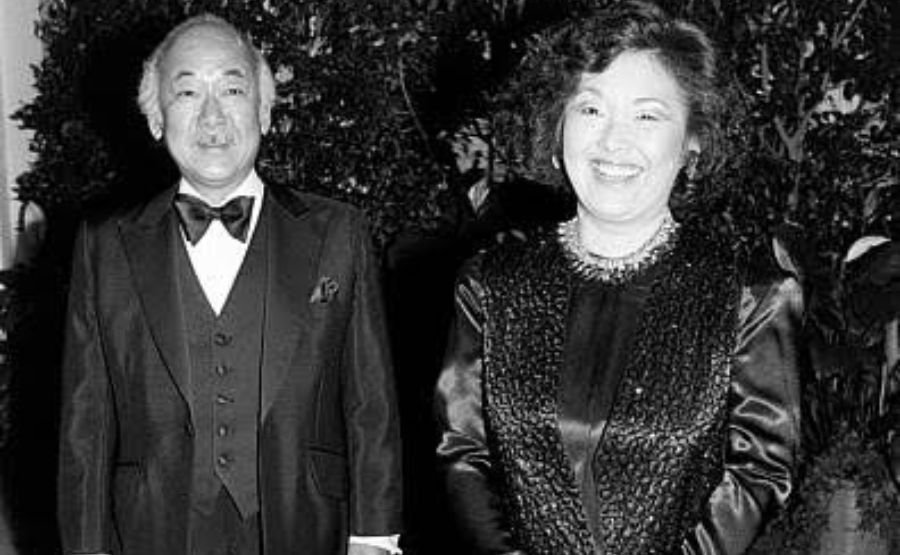
Yukiye Kitahara is a woman who married an actor in 1970, had two daughters with him, maintained a private life throughout a nineteen-year marriage that ended in 1989, and has said nothing publicly since. That is the verifiable biography.
Whether she was a good person, a happy person, a person who left when she needed to or who was left when she didn’t want to be — nobody outside the family knows. Whether she thinks about the Karate Kid films the way the rest of us do, or whether she’s spent thirty-five years trying to be a person who is not primarily understood as someone’s ex-wife — also unknown.
The content farms invented a feminist reformer, an actress, a graphic designer, and several other Yukiye Kitaharas to fill a search-traffic hole. None of them are real. None of them are respectful of what she’s actually done, which is construct a life the internet can’t get inside.
I respect that. I still wrote this article, which she’d probably find irritating. That’s a fair response.
FAQs
1. Who is Yukiye Kitahara?
Pat Morita’s second wife. They married December 28, 1970, and divorced in 1989 after nineteen years. They have two daughters: Tia Morita and Aly Morita. Yukiye has never given a public interview and has no known public profile.
2. Is Yukiye Kitahara a feminist reformer?
No. One content farm page describes her this way in detail. It’s a complete fabrication — a hallucination that attached historical Japanese women’s activism to her name. She has no documented career or public advocacy of any kind.
3. What does Yukiye Kitahara do for a living?
Unknown. No verified source documents her profession. Pages that claim she is an “actress” or “graphic designer” are wrong — one is fabrication, one confused her with Kristin Hodge, Jon M. Chu’s wife.
4. Why did Yukiye Kitahara and Pat Morita divorce?
Never publicly stated by either party. The divorce finalized in 1989. Pat Morita’s documented alcohol struggles peaked around this period, and he married his third wife Evelyn Guerrero in 1991. No other context has been made public.
5. How old is Yukiye Kitahara?
Unknown. No birth date has ever been verified. Based on the timeline — married in 1970 with daughters who are now adults — she would likely be in her late sixties to mid-seventies as of 2025. One farm page assigns a 1991 birth date, which is impossible.
6. Does Yukiye Kitahara have social media?
No confirmed public accounts on any platform.
7. Who is Aly Morita?
Yukiye’s younger daughter, who has worked in entertainment and maintains a semi-public profile. She is more visible than her sister Tia, who appears to have chosen a fully private life.
8. When Pat Morita passed away, what was his net worth?
Approximately $5 million at the time of his death on November 24, 2005, at age 73.
9. Did Yukiye Kitahara appear in The Karate Kid?
No. The Karate Kid (1984) and its sequels were made during and after her marriage to Morita, but she has no acting credits and no documented connection to those films.
10. What was Pat Morita’s first wife’s name?
Kathleen Yamachi. Morita married Yukiye Kitahara the same year he divorced Yamachi — 1970.
11. Is there any interview with Yukiye Kitahara anywhere?
None that I could locate across an extensive research sweep. Not a print interview, not a podcast, not a television appearance. Thirty-five-plus years of public silence following the 1989 divorce.
Uncover something new with every read at The Hidden Magazine.



One Comment