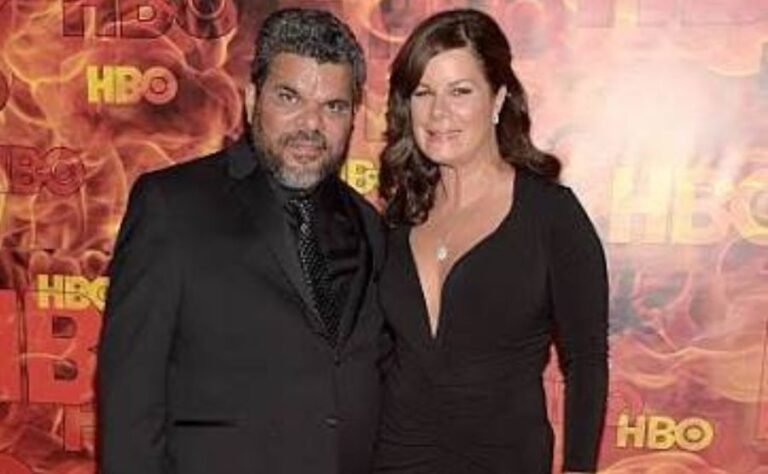
Karen Backfisch: Biography, Career, Personal Life & Latest Updates
Every article about Karen Backfisch starts the same way, and every article gets it wrong in the same direction. She isn’t famous because she married a famous man. She’s famous — to the extent anyone bothers to acknowledge her at all — because she predicted Black Monday a week before it happened, walked into the office of a struggling new fund manager, and quite literally kept his entire operation from collapsing. That’s the thing that gets buried in paragraph four, if it gets mentioned at all. What leads? Her ex-husband’s face.
Let’s be honest about what that says.
Quick Bio
| Detail | Info |
| Full name | Karen Backfisch-Olufsen (Olufsen from a post-Cramer remarriage) |
| Known nickname | “The Trading Goddess” — used on Wall Street and in Cramer’s memoir |
| Career | Co-owner of Cramer & Co. and trader for Michael Steinhardt’s hedge fund. |
| Crash prediction | Warned Cramer to sell everything approximately one week before Black Monday 1987 |
| Marriage to Cramer | 1988–2009 (21 years) |
| Children | Two daughters: Cece Cramer and Emma Cramer |
| Stopped trading | 1991, after first daughter was born |
| Divorce settlement | Received Summit, NJ house (originally $2.375M) transferred for $1; sold it 2019 for $3.675M |
| Education | Stony Brook University (most cited) or Harvard MBA (contradicted across sources — unverified) |
| Post-2009 | Remarried (surname change); no public profile |
What All the Websites Get Wrong
The first thing you should know is that almost every Karen Backfisch article on the internet is a copy of a copy of a copy. Different domain names, same paragraph order, same phrases, same cheerful confidence about facts that nobody actually verified. One site says she graduated from Stony Brook and went straight to Steinhardt’s fund with Cramer. Another says she has an MBA from Harvard Business School. These claims cannot both be true. Neither site cites a source. Both state their version as if they personally checked the transcripts.
Here’s the thing — at least three separate sites describe Karen as having had “a passion for journalism from a young age.” Not a little passion. A defining, formative passion. Zero primary evidence exists for this claim. None. What we know about Karen is that she was a trader, a good one, the kind of good that has a nickname. The journalism detail appears to have been invented once and then reproduced everywhere because it sounded plausible and nobody questioned it.
This is what passes for biography in 2026.
See also “Milaine Desaulniers : Biography, Professional Background, Personal Life, and Most Recent Updates“
The Crash She Saw Coming
Before we get into the relationship timeline or the $1 house or the surname that tells you something nobody has reported on — let’s spend a minute on what actually made Karen Backfisch matter on Wall Street.
It was 1987. Cramer had left Goldman Sachs and was running his own fund out of office space he essentially borrowed from Michael Steinhardt’s operation. His fund was new. His capital was not enormous. And he was a young guy who liked to trade hard and talk louder than his position size sometimes warranted.
Then his future wife — at this point just a trader at Steinhardt’s firm he was apparently courting — told him to sell everything. A week before Black Monday hit.
According to Cramer’s own account, he listened. He sold. On October 19, 1987, he was one of the few hedge fund managers in the room to leave with a profit. Think about what that means: in a single conversation, Karen Backfisch’s read of the market prevented a small, early-stage hedge fund from being obliterated before it got started. Cramer has said repeatedly in interviews and in writing that the fund’s success was unimaginable without her. Not a polite thing to say. A specific claim he makes over and over.
A Goodreads reviewer who read Confessions of a Street Addict put it more bluntly: one of the most remarkable things about the book is not Cramer at all, but his wife Karen, who steps in and saves the hedge fund in a few hours when they are something like a hundred million dollars in the hole.
That happened. It’s documented. And somehow it’s still the sixth paragraph of every article about her.

The Question Nobody Asks About “Olufsen”
Here is a detail so obvious and so consistently ignored that it makes you wonder whether anyone writing about Karen Backfisch-Olufsen has ever actually read her name.
Her surname is Backfisch-Olufsen.
She was born Karen Backfisch. She married Cramer and became Karen Backfisch-Cramer or Karen Cramer, depending on the source. They divorced in 2009. And at some point afterward, she became Karen Backfisch-Olufsen.
That “Olufsen” is a surname from another relationship. She remarried. Nobody reports on it. Nobody names the person. I couldn’t find the identity of Olufsen anywhere in the public record. I’m not saying it’s a secret that needs exposing — she’s clearly chosen to live privately, and good for her — but the complete absence of curiosity about even the most basic biographical facts here is striking. Every article describes her current status as “not remarried” or “single” after the divorce. Every single one. They looked at the name Backfisch-Olufsen and just didn’t notice the second half.
Co-Owner. Not “Support Staff.”
The standard framing is that Karen “helped” Jim run his fund, or “worked alongside” him, or “supported his enterprises.” Let’s be precise about what the actual record says.
When Cramer formed Cramer & Co. in 1987, he operated out of borrowed space at Steinhardt’s offices. Karen was already there. After they married in 1988, she joined the fund in a formal capacity. A sourced description from the Encyclopedia.com company history calls her the “half proprietor” — half owner. Not an employee. An owner.
The fund, at its peak, managed $450 million in assets. Its average annual return over 14 years was 24 percent. Cramer has said publicly that it generated $300 million or more in profits across its lifetime. Karen was co-owner of that operation from 1988 until she stepped back from trading in 1991 to raise their first daughter, Cece. That’s three years of being the brains of a wildly successful fund during some of the most volatile market periods of the 20th century.
And what do most biographical sites say her net worth is? Between $500,000 and $1 million. For a half-owner of a fund that generated hundreds of millions. For a woman who, per the divorce settlement, received a house worth $2.375 million for a dollar and then sold it ten years later for 3.675million.Themathon”500,000 to $1 million” does not work. Someone just made it up because it sounded small and wife-sized.
The Timeline Problem
Pay attention to this, because it matters and nobody has bothered to sort it out.
Cramer left Goldman Sachs and started his fund in 1987. He married Karen in 1988. Multiple biographical sites describe the sequence as: Karen worked at Steinhardt’s fund with Cramer, then they married in 1988. That framing implies they arrived at Steinhardt together. What Cramer’s own book and multiple primary sources clarify is that Karen was already at Steinhardt when Cramer showed up to borrow desk space for his new fund. She was the established professional. He was the visitor. They got together over the period 1987–1988, married in 1988, and she joined his fund after that.
She didn’t follow him into a job. He found her at someone else’s job, and her instincts saved him.
I want to be careful here and say that some of this comes from a secondhand read of Cramer’s own memoir, which is his version of events narrated by a man who is not famous for his humility. Maybe Karen’s account of those years would read differently. We’ll probably never know, because she hasn’t given one publicly.

The 1991 Exit
In 1991, Karen and Jim had their first daughter. Karen stopped trading. Full stop.
This is where the story the internet wants to tell gets genuinely quiet. Because from 1991 until the 2009 divorce, Karen’s public footprint is essentially zero. Cramer went on to become the human foghorn of financial television. In 2005, he founded Mad Money, Kudlow & Cramer, and TheStreet.com. Karen raised two daughters in Summit, New Jersey, in a house that cost over two million dollars.
The websites that describe her as still “possibly working for Cramer’s company” as of their publication date — some as late as 2025 — are producing nonsense. They’re guessing and presenting the guess as news. There is no evidence she remained involved in any professional capacity after the early 1990s.
What there is evidence of: she kept the name Cramer gave her career, she took the house at settlement, she sold that house a decade later at a substantial profit, and she went on to a life that doesn’t require explaining to the internet.
What the Divorce Actually Looked Like
The divorce was finalized in 2009. Cramer met his current wife, Lisa Cadette Detwiler, in 2006, which is when both of them were apparently already in the process of separating from their previous partners. They married in 2015.
The settlement terms that are public: Jim transferred the Summit, New Jersey home to Karen for a consideration of one dollar. Property records confirm this. They had bought the house together in 1999 for $2.375 million. It was a five-bedroom, century-old home on over an acre. Karen held onto it for roughly nine years after the divorce, sold it in April 2019 for $3.675 million.
That transaction tells you something about the actual financial picture. A woman who received a $2.375 million asset as part of her divorce from a man worth an estimated $150 million, held it, and liquidated it at a $1.3 million gain is not a woman with a net worth of $500,000. I’m not claiming to know the exact figure — because I genuinely don’t, and neither does anyone else citing those numbers. But the dollar figures from the one documented transaction we actually have access to suggest the low-end estimates are fabricated comfort food for people who want famous men’s ex-wives to be a bit less than to be worth packages.
What She Isn’t
A lot of the sites describe Karen as a “philanthropist.” I couldn’t find a single documented act of philanthropy attributed to her. Another common framing: “entrepreneur.” No evidence of any venture after the hedge fund years. “Motivational figure.” Based on what, exactly?
This is content farming doing what content farming does. You have a name with search traffic. You have thin facts. You need 800 words. You add descriptor words that imply activity without requiring any evidence that the activity occurred. “Karen Backfisch-Olufsen is a prominent businesswoman known for her innovative approach to marketing and brand development” — that’s a quote from a real website that appears when you search her name. It describes a completely different person with a similar name, and has been served up as biography for years.
There are, at this point, at least two Karen Backfisch-Olufsen articles that seem to be writing about an entirely different Karen Backfisch-Olufsen. And the SEO doesn’t care.
Where I Actually Land
Karen Backfisch earned the nickname “Trading Goddess” before she was thirty. She called the 1987 crash. She co-owned one of the most successful hedge funds of its era. She raised two children while her husband became a television fixture. She quietly divorced, walked away with real assets, and at some point married again without making a single headline about it.
The internet describes her as “Jim Cramer’s ex-wife.”
Let’s be real about what that framing is doing. It’s not describing her; it’s filing her.By giving her a permanent administrative category—former wife—it informs the reader that she serves as background information for someone else’s narrative. Even in the articles that spend five hundred words on her career achievements, her name gets the same thumbnail treatment: Karen Backfisch, known for being the ex-wife of Jim Cramer.
My honest take is that Karen Backfisch understood something most people never figure out — that being publicly defined is not the same as being known, and that fame of the kind her ex-husband chose is not obviously worth what it costs. She walked away from one of the loudest careers in financial television and into silence. She raised her kids. She made money when she sold a house. She appears to have remarried and kept that private too.
The Trading Goddess is still making better calls than anyone giving you quotes about her.
FAQs
1. Who is Karen Backfisch?
Karen Backfisch is a former Wall Street trader and the first wife of TV personality Jim Cramer. She anticipated the 1987 stock market crash a week before it occurred while working at Michael Steinhardt’s hedge fund. Later, she co-owned her husband’s hedge fund, Cramer & Co.She is known on Wall Street by the nickname “Trading Goddess.”
2. Why is Karen Backfisch called the “Trading Goddess”?
The nickname came from Wall Street circles and was popularized by Cramer’s 2002 memoir Confessions of a Street Addict. She earned it for her instincts, particularly the 1987 crash warning that saved Cramer’s fund from likely collapse. It stuck because it was accurate.
3. Did Karen Backfisch work at Jim Cramer’s hedge fund?
Yes. After marrying Cramer in 1988, she joined Cramer & Co. as co-owner — not an employee, a partner. Multiple sources describe her as half-owner of the firm. She left trading in 1991 when their first daughter was born.
4. Where did Karen Backfisch go to school?
This is genuinely unclear. Some sites say Stony Brook University. Others say she has an MBA from Harvard Business School. The two claims contradict each other and neither appears to be sourced from any primary document. I couldn’t verify either.
5. What happened to Karen after the divorce?
She retained the Summit, NJ house as part of the 2009 divorce settlement (transferred for $1). She sold it in April 2019 for $3.675 million. She has since remarried — her current surname, Backfisch-Olufsen, reflects that — and maintains no public presence.
6. Who is Karen Backfisch-Olufsen married to now?
The “Olufsen” in her surname indicates a remarriage after her 2009 divorce from Cramer. The identity of her current husband is not publicly documented anywhere I could find. She’s chosen to keep this private.
7. What is Karen Backfisch’s net worth?
The estimates floating around online (500K–1 million) are almost certainly wrong and appear to have been made up. As co-owner of a fund that generated hundreds of millions in profits, and as someone who received a multi-million-dollar property in her divorce settlement, the actual figure is likely substantially higher. The honest answer is: unknown.
8. Why did Jim Cramer and Karen Backfisch divorce?
No specific reason has been made public. They separated around 2006 (when Cramer met his current wife Lisa Cadette Detwiler), and the divorce was finalized in 2009. “Personal reasons” is all that’s been stated.
9. Did Karen Backfisch appear in Jim Cramer’s books?
Yes, significantly. In Confessions of a Street Addict (2002), she’s a central figure — described as his partner both professionally and personally. The book contains a chapter titled “The Trading Goddess Returns” about her stepping back in to save the fund during the 1998 crisis. Readers of the book often say her sections are among the most compelling in the entire memoir.
10. Does Karen Backfisch have social media?
No public social media presence that I could find. She has maintained a remarkably low profile since the hedge fund years.
11. What was Karen Backfisch’s role in avoiding the 1987 crash?
According to Cramer and multiple published sources, she advised him approximately one week before Black Monday (October 19, 1987) to sell all his positions. He followed her advice. His fund ended October 1987 with a positive return at a time when most hedge funds were destroyed. This single call may be the most consequential trade decision in the early history of Cramer & Co.
Uncover something new with every read at The Hidden Magazine.