Asalia Nazario: Biography, Age, Family, Career, and Her Connection to Wesley Snipes
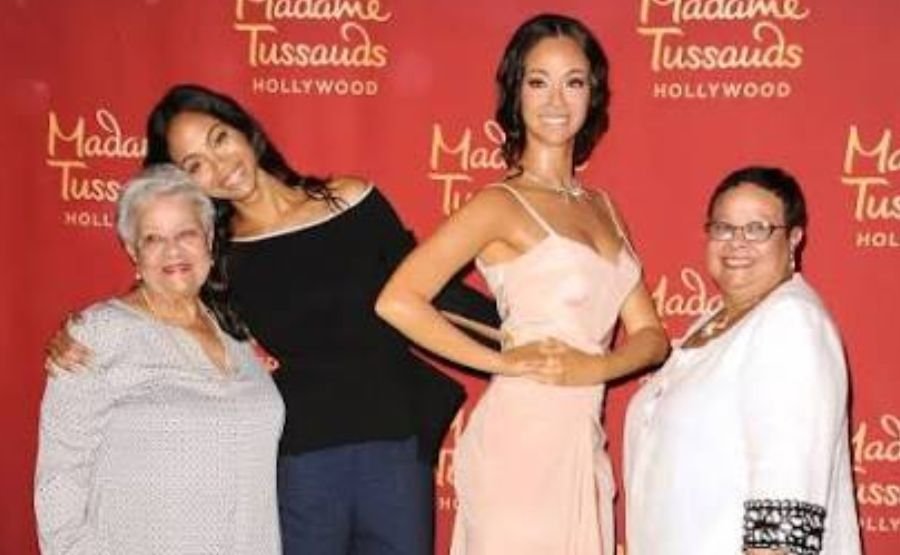
Here’s the uncomfortable truth nobody leads with: everything you think you know about Asalia Nazario was filtered through her daughter’s press cycles. Every headline, every inspirational listicle, every weepy paragraph about hotel maids and sacrifice — it all gets laundered through Zoe Saldaña’s award season needs and media handlers. Asalia Nazario herself has given, as far as I can find across nearly two dozen sources in English and Spanish, exactly one substantive interview.
One. Diario Libre, 2014. And yet she is treated by the internet like a fully documented woman whose full arc has been told. It hasn’t been. What we have is a story told largely in someone else’s voice about someone who survived enough to deserve her own.
That matters. Let’s keep that in mind as we go.
Quick Boi
| Detail | Info |
| Full Name | Asalia Nazario |
| Birth Year | Approximately 1951 |
| Birthplace | Puerto Rico (some sources say partial Dominican heritage — sources conflict) |
| Moved to U.S. | Age 10, reportedly 1961 |
| Husband | Aridio Saldaña (Dominican; died in car accident, 1987) |
| Children | Mariel, Zoë, and Cisely Saldaña |
| Jobs Held | Hotel maid, courtroom translator (Spanish-English), New York City |
| Remarried | Dagoberto Galán (year unconfirmed) |
| Mother | Argentina Cesse (arrived U.S. 1961; named in Zoë’s 2025 Oscar speech) |
| Public Profile | Minimal — known almost entirely through her daughter’s interviews |
| Oscars Moment | Present, front row, March 2, 2025 — Zoë screamed “Mommy!” from the stage |
A Note on the Contradictions Before We Go Anywhere
Before the narrative even starts, let me put a pin in something that most articles glide right past.
Asalia Nazario’s own ethnicity is not agreed upon. Wikipedia’s Zoë Saldaña entry describes her as “half Dominican and half Puerto Rican.” A majority of celebrity profiles call her “Puerto Rican.” Some sketchy content-farm articles call her simply “Dominican.” Zoë herself has told Wired that she is “three-quarters Dominican and one-quarter Puerto Rican” — which tracks if Asalia is half-and-half and Aridio is fully Dominican. But then there’s the Diario Libre interview from 2014, referenced in at least one source, where Asalia apparently spoke about her Dominican roots too.
The year of Aridio’s death? Also not agreed upon. Serious outlets consistently say 1987. At least two sources say early 1988. One places the date as specifically March 28, 1987. Another says January 1988.
I’m telling you this upfront not to nitpick, but because it reveals the actual shape of the story: we’re working with second and third-hand accounts of a woman who has never particularly wanted to explain herself to the press. And you know what? That’s her right. But let’s not pretend the portrait is complete.
See also “Katianna Stoermer Coleman: The Untold Story of Zendaya’s Sister and Her Private Life“
Queens, 1987: The Day the Story Really Begins
The mythology wants you to start in Puerto Rico, with warm breezes and Caribbean music and all that soft-focus imagery. Skip it. The story that matters starts in Jackson Heights, Queens, on a day in 1987 when a car crash killed Aridio Saldaña and left his wife with three daughters under the age of nine and no roadmap.
Zoë was nine years old. Cisely was younger. Mariel the oldest. And Asalia Nazario, somewhere around her mid-thirties, was now the entire structure of a family that had just had its foundation knocked out.
What Zoë said about that period is striking. She told Harper’s Bazaar that her mother “wouldn’t get out of bed” for years. That phrase circulated after the February 2025 issue, and I keep coming back to it. Not because it’s dramatic — it’s the opposite of dramatic. It’s just what grief does to a person, particularly a person who didn’t have the financial or emotional infrastructure to absorb a loss like that. She didn’t have therapy. She didn’t have a support network of celebrity friends. She had a New York City apartment, three kids, and bills.
The standard telling jumps quickly from the death to the solution. That annoys me. The solution — sending the girls to the Dominican Republic — sounds practical and clean in retrospect. But think about what that actually means: a grieving woman in her mid-thirties, in a strange city not built for her kind of pain, makes the decision to put her daughters on a plane to their late father’s homeland and then go back to work. Alone. That’s not a footnote. That should be the whole chapter.
The DR Years: What the Girls Remember, What Asalia Probably Doesn’t Talk About
The Dominican Republic chapter gets handled tenderly in most write-ups. And fair enough, it’s genuinely formative. But there are two different versions of what happened, depending on which end of the experience you’re narrating.
For the girls, it was culture shock first and beauty second. Zoë has described the experience as disorienting — no winter, no grapes or apples, only mangoes and guavas, and they weren’t allowed to speak English at school. They were New York kids dropped into a world their father had come from but that they had no personal map for. Ballet entered the picture there, specifically because Asalia, still working in New York, was sending money back to pay for private school and extracurriculars. The dancing, the discipline — Zoë has been explicit: her mother was “trying to find ways to keep us busy,” and that decision put her on the path to everything that followed.
For Asalia, those years look like something else entirely. She was working two jobs simultaneously: hotel maid and courtroom translator. Those are not glamorous jobs. The hotel maid work is obvious labor — physical, anonymous, the kind of job that empties you at the end of a shift. The courtroom translator role is more interesting, actually. That requires a formally tested bilingual proficiency; New York courts run a certification process for Spanish interpreters. She wasn’t just somebody who happened to speak Spanish. She passed exams for that.
Here’s the detail most articles skip over: she split her time. She’d work in New York for a stretch, then go to the Dominican Republic for a stretch, then back. She was commuting between survival and parenting in a way that collapses easy categories. She wasn’t simply absent. She wasn’t simply present. She was both things, in alternation, and the girls felt it.
Zoë told a reporter once that “we had to become each other’s emotional support.” That sentence is doing a lot of work. It’s diplomatic and loving, but if you read it slowly, what you’re hearing is: our mother was not fully there, and we understood why, but we still felt it.
The Remarriage Nobody Talks About Carefully
At some point — the sources are not specific about when — Asalia Nazario remarried. His name is Dagoberto Galán, and by all accounts he became a genuinely stable stepfather figure. The girls call him dad in public interviews. He appears on red carpets. Zoë thanks him on Father’s Day.
What none of the articles I’ve found actually report is when this marriage happened. Was it while the girls were still in the Dominican Republic? After they came back to New York? The lack of this timeline isn’t incidental — it matters for the shape of the family’s recovery. But nobody has apparently thought to ask, or if they asked, Asalia hasn’t answered.
The absence of that information is itself a data point. This is a woman who has managed, against considerable odds, to stay largely out of the narrative machinery that grinds up the families of famous people.
2014, the Web Series, and the Most Revealing Non-Moment
In October 2014, Zoë launched an AOL Originals series called Zoe Saldaña Presents My Hero. The first episode was about her mother. She produced it. She hosted it. She designed the whole thing as a tribute.
Now here’s the part that stuck with me when I dug into the original coverage. A reviewer at the Daily Dot noticed something that everyone else praised their way past: in an episode nominally about Asalia Nazario, Asalia Nazario was barely in it. Zoë did most of the talking. The mothers and heroes in these kinds of tribute formats are propped up as symbols while still being kept, functionally, in the background.
That observation isn’t a criticism of Zoë. She loves her mother, clearly, deeply, and verifiably. But it accidentally captures something true about Asalia’s entire public existence: she is honored from a distance. She is credited without being centered. She shows up at the Crystal + Lucy Awards, she poses for photos, she exists in Instagram captions — but her own perspective, her own narration of her own life, is almost entirely absent from the record.
That 2014 Diario Libre interview is the one exception I could locate where she apparently spoke about widowhood directly. And it’s not available in translation. It lives in Spanish, in a Dominican newspaper, and the English-language internet has largely not bothered.
The Thandiwe Newton Incident, or: What She Actually Thinks of the Fame
Here’s a small thing that tells you more about the dynamic than any red carpet moment. During a 2019 Late Show appearance, Zoë revealed that her mother regularly confused her with actress Thandiwe Newton. Asalia apparently thought Zoë was in Westworld. This isn’t a joke about a confused elderly person. This is a woman who has remained genuinely unimpressed and unswayed by her daughter’s stardom. Zoë found it funny. She should.
That detail — a mother who can’t keep her daughter’s filmography straight — is the most humanizing thing in this entire story. It suggests Asalia is not performing the supportive-immigrant-mother role that the press has assigned her. She’s just a person. She watched the wrong show and got her face mixed up.
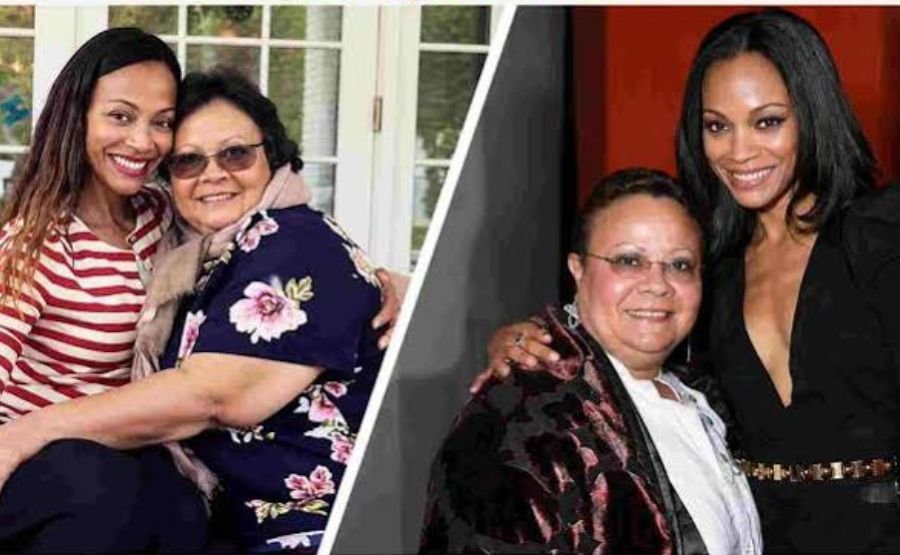
March 2, 2025: The Oscars, and What Shouting “Mommy!” Actually Means
When Zoë Saldaña won Best Supporting Actress at the 97th Academy Awards for Emilia Pérez, she made history as the first Dominican American to win an Oscar. And the first thing she did was look directly at her mother in the audience and shout “Mommy! Mommy!” from the stage.
That image was everywhere. That image is going to be in cultural memory for a while.
The speech that followed was considered and powerful: she said she was “a proud child of immigrant parents with dreams and dignity.” She named her grandmother, Argentina Cesse, who had come to the United States in 1961. She said she would not be the last. It was real. It wasn’t a PR construct.
But think about what else that moment contains. Asalia Nazario was in that room, watching her daughter accept an award for singing in Spanish in a film about a Mexican cartel drama — a role that depended on bilingual fluency that Asalia enforced in a Queens apartment forty years ago. The daughter who went to private school in the Dominican Republic on hotel-maid money. That throughline is not sentimentality. It is logistics. It is the direct consequence of specific decisions made by a specific woman in specific years of specific deprivation.
What backstage footage showed: Zoë said she locked eyes with Asalia before beginning the speech. “I saw her — it was really beautiful,” she told Good Morning America immediately after. That’s your whole story, in about ten words.
The Ethnicity Question Won’t Resolve Itself
Let me come back to this because it bothers me and it should. The internet has collectively decided that Asalia Nazario is “Puerto Rican” with occasional nods to Dominican heritage. Wikipedia, citing an interview where Zoë called herself “three-quarters Dominican,” points toward Asalia being half Dominican herself.
Why does this matter? It matters because the immigration story changes depending on which island’s history you’re invoking. Puerto Rico is an American territory — Asalia’s move to New York, if she was born there, was an internal migration, not immigration in the legal sense. Dominican immigration in 1961 carries a completely different weight: that was the final year of Trujillo’s brutal dictatorship. The grandmother, Argentina Cesse, arrived in 1961 from the Dominican Republic — that’s a refugee story, essentially, even if nobody uses that word.
The fact that most English-language media has collapsed this into “Puerto Rican mom” and moved on is exactly the kind of cultural flattening that Zoë herself has spent years pushing back against in public.
Final Words
Here’s what I actually think, for whatever that’s worth: Asalia Nazario is not a story about sacrifice as a pathway to celebrity. She’s a story about what it looks like when survival is unglamorous, unwitnessed, and genuinely effective. She kept her girls bilingual in a monolingual culture. She funded private school from hotel-room turnovers. She maintained a legal professional identity — court translator — alongside service work, which suggests a person who was building something, not just enduring.
The narrative that gets sold is “an immigrant mother makes good through daughter’s success.” That’s too passive. What actually happened is that a woman made specific, expensive, painful decisions in specific difficult years — and those decisions worked. The success belongs to Zoë. The architecture belongs to Asalia.
She probably doesn’t want a think-piece written about her. I’d lay money on that. She turned up at the Oscars, she let her daughter shout “Mommy!” across a television audience of millions, and she will almost certainly not read this.
That’s fine. Some people get to just live their story without explaining it. The uncomfortable thing is that the rest of us keep explaining it for them anyway — and usually get the details slightly wrong.
FAQs
1. Who is Asalia Nazario?
She’s the Puerto Rican-born mother of actress Zoë Saldaña. That’s not all she is, but that’s the entry point for most people, so there it is.
2. Is Asalia Nazario Puerto Rican or Dominican?
Honestly, possibly both. Wikipedia says she’s half Dominican and half Puerto Rican. Most celebrity profiles call her just Puerto Rican. Zoë has described herself as three-quarters Dominican, which would only work if Asalia has significant Dominican heritage herself. The internet hasn’t agreed, and Asalia hasn’t publicly clarified in English.
3. What jobs did Asalia Nazario have?
Hotel maid and courtroom translator, both in New York City during the late 1980s and 1990s. The translator role required certified bilingual proficiency in Spanish and English — not a minor skill. She worked both jobs simultaneously for years.
4. Why did Asalia send her daughters to the Dominican Republic?
Her husband Aridio died in a car accident in 1987. She was a single widowed mother in New York, couldn’t be both provider and present parent simultaneously, and New York in the late 1980s was genuinely rough — particularly for a family in the financial situation she was in. Sending them to their grandparents in the Dominican Republic was practical, painful, and effective.
5. Who is Asalia Nazario’s second husband?
Dagoberto Galán. The year of marriage is not confirmed in any source I found. He has attended red carpet events with Zoë and her sisters and is considered their stepfather.
6. Was Asalia at the 2025 Oscars?
Yes, front row. Zoë shouted “Mommy!” at her from the stage while accepting Best Supporting Actress for Emilia Pérez. Backstage, Zoë said locking eyes with her mother was “really beautiful.”
7. What is Asalia Nazario’s net worth?
Various sites throw out numbers around $500,000. That figure appears to be pure speculation. No credible source has reported verified financial information about her. Treat any specific number with skepticism.
8. Did Asalia encourage Zoë’s acting career?
Indirectly, yes — but through culture rather than industry access. She kept the girls bilingual. She put Zoë in dance and ballet classes in the Dominican Republic. Some sources claim she pushed Zoë toward the Star Trek role after being a fan of the original series. Whether that’s apocryphal or not, it’s funny either way.
9. Why don’t we know more about Asalia Nazario directly?
Because she doesn’t appear to want you to. One confirmed interview, in Diario Libre in 2014. The rest of what exists is Zoë talking about her. This is rare and refreshing in a cultural moment where celebrity parents often become secondary media personalities.
10. Did Asalia Nazario immigrate or is she a U.S. citizen?
She moved to the United States at approximately age 10, reportedly around 1961, with her mother (the grandmother Argentina Cesse). She is described as a naturalized American citizen in several sources. If she was born in Puerto Rico, she was actually a U.S. citizen from birth — which is another small detail the “immigrant parents” framing occasionally glosses over.
11. Where does Asalia Nazario live now?
Currently in the United States — exact location not publicly disclosed. She appears at Zoë’s major events and maintains what appears to be a close but private relationship with her family. That’s about as much as can be said without speculating.
Uncover something new with every read at The Hidden Magazine.