
Dale Russell Gudegast: Biography, Age, Family, Career, and Her Marriage to Eric Braeden
Here’s the uncomfortable thing nobody wants to say out loud: the most interesting fact about Dale Russell Gudegast is that practically everything “known” about her online is wrong, contradictory, or just completely made up by content farms copy-pasting each other into infinity. And the second most interesting thing is that she’s been fine with that. For decades. Apparently on purpose.
That’s not a small thing. That’s a choice. In Hollywood — a city that runs entirely on the currency of visibility — disappearing is an act of will.
Quick Bio
| Detail | Info |
| Full Name | Dale Russell Gudegast (née Dale Russell) |
| Birth Year | Circa 1941–1942 (exact date disputed across sources) |
| Birthplace | Los Angeles, California (most credible sources; some say Bakersfield) |
| Education | Art major, Santa Monica College |
| Married | Eric Braeden (Hans-Jörg Gudegast), October 8, 1966 |
| Children | One son: Christian Gudegast (b. February 1970) |
| Known Work | Holiday in the Sun (2001, minor role); interior/pillow designer |
| Family | Sister: the late actress Sigrid Valdis |
| Grandchildren | Three granddaughters (via Christian and wife Natasha) |
| Home Loss | Pacific Palisades house of 45 years destroyed in January 2025 wildfires |
The Internet Has No Idea Who She Is. And That’s Kind of the Point.
Go ahead, search her name. What you get is a swamp of AI-generated garbage — pages that list her birthdate as January 17, 1941; then November 17, 1941; then June 21, 1942; then January 1, 1942; then, in one truly unhinged entry, January 15, 1965 (which would make her 21 years old when she got married and roughly 56 years younger than she actually appears). One site confidently tells you she was born in Billings, Montana. Another says Bakersfield. Several say Los Angeles. Nobody cross-checked a single thing.
Some of these pages — and I mean actual celebrity bio sites — claim Dale appeared in General Hospital for over twenty years, playing a character called Nurse Jessie Brewer. That’s not Dale Russell Gudegast. That’s Emily McLaughlin, a completely different person who died in 1991. The internet just invented a soap opera career for a woman it knows almost nothing about, and nobody noticed or cared enough to fix it.
You’d think this would make her a cipher. But I actually think it makes her fascinating. Because here’s what is documented: she went to Santa Monica College as an art major while a young German immigrant named Hans-Jörg Gudegast was studying political science and playing semi-pro soccer on the same campus. Eric Braeden described her as “well-educated, very steeped in European literature,” noting she went to a Catholic school. She had, by all reasonable inference, genuine intellectual substance. And then she married the guy, had his kid, built a life, and mostly stayed out of the frame.
That’s not nothing. That’s a whole life.
See also “Daniel John Gregory: Biography, Age, Career, Net Worth, Family, and Marriage to Martha MacCallum“
Two Young People Who Didn’t Know What They Were Starting
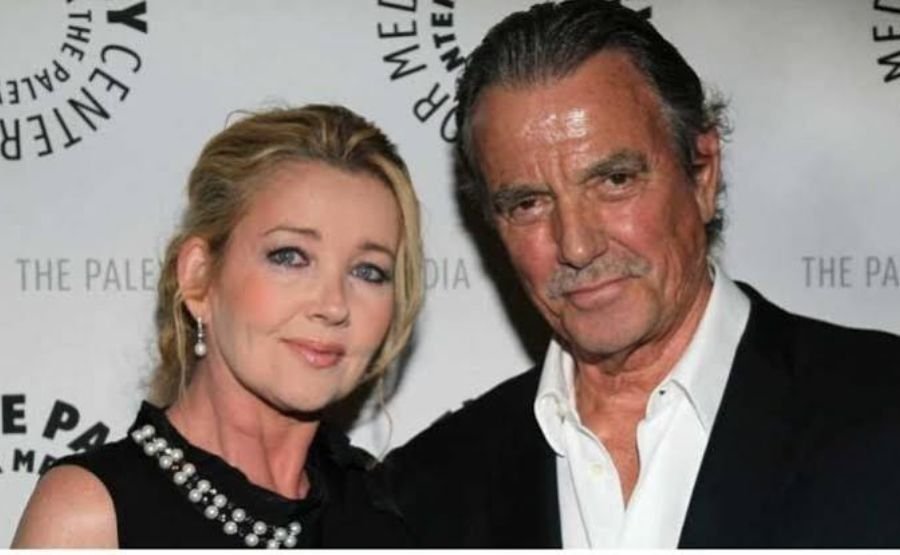
Think about what 1966 actually looked like for these two. Eric Braeden was not yet Eric Braeden. He was Hans Gudegast — a German actor getting work playing Nazis and Germans-of-ambiguous-morality in shows like The Rat Patrol, which is about as niche as it sounds. He hadn’t taken his stage name yet. He hadn’t landed The Young and the Restless. He was a tall, square-jawed immigrant chasing whatever Hollywood would give a German accent in the mid-sixties.
Dale Russell married that guy. Not Victor Newman. Not the Emmy winner. The struggling foreign actor who wasn’t even sure what his name was going to be.
That detail keeps getting buried in the coverage, but it matters enormously. The whole narrative of the Hollywood power couple doesn’t apply here because there wasn’t any power yet. This was two young people at a California community college — one studying art, one studying political science and chasing soccer games — who decided to make a life together before either of them knew what that life would look like.
She gave up the name Russell professionally. She became Dale Russell Gudegast. She kept his birth surname — the one he himself eventually moved away from professionally. That’s worth pausing on.
What She Actually Did With Herself
Here’s where the record gets genuinely thin. And I want to be honest about that instead of filling the gap with warm, flattering fog the way every other article does.
Her only confirmed film role is a small part in Holiday in the Sun (2001) — the Mary-Kate and Ashley Olsen vehicle. It’s not a prestige credit. It’s a Disney Channel movie made for teenage girls. Some sources call it her acting debut; others call it a brief return to acting; a few claim it was part of a longer screen career that simply doesn’t appear in any database I can verify. The truth is probably that it was a one-off, a cameo, maybe even a favor arranged through connections she had from decades in the industry’s social ecosystem.
She worked as a pillow designer and interior designer, while Braeden’s career kept him in the spotlight. And before you dismiss that — don’t. It’s creative work. It’s the continuation of that art-major sensibility from Santa Monica College. It’s also her own thing, separate from her husband’s empire, which I think is easy to undervalue.
The 1997 account I found is actually the most human snapshot of her: she’s described as running her pillow design business at the time, and she tells whoever’s asking that Eric is “endearing as no one else can be” because he’d bring her wildflower bouquets after taking a jog near their West Los Angeles home. It’s a small detail. It’s also the only quote attributed to her I found that feels like it came from a real person having a real conversation.
The Sister Nobody Writes About
Dale’s sister was Sigrid Valdis. That name might ring a bell if you watched Hogan’s Heroes in the late 1960s. Valdis played Hilda, Colonel Klink’s secretary, and she was actually fairly prominent in the role for the show’s later seasons. She was also married to Bob Crane — yes, that Bob Crane, the one murdered in 1978 in a case that became one of the most disturbing unsolved (later partially resolved) celebrity crimes of the twentieth century.
None of the Dale Russell Gudegast articles mention any of this. Almost none of them name Sigrid Valdis at all. Dale’s sister is the late Valdis; her brother-in-law was Bob, and her nephew is Scott. The articles that acknowledge the sibling at all list her as a relative and move on immediately.
That’s a strange silence. Dale’s sister married a man whose life and death were so dark they inspired a Paul Schrader film (Auto Focus, 2002). That’s not irrelevant biographical texture. That’s a significant piece of family history that the internet chooses to scrub clean in favor of sentences about Dale being “a constant source of strength.” Why? Probably because it complicates the sentimental narrative. It introduces grief and tragedy and tabloid wreckage into what is supposed to be a simple story about a devoted Hollywood wife.
The real Dale Russell Gudegast grew up with that sister. She watched what happened to that family. She was connected, by blood, to a murder case. And she still managed to maintain a marriage that by all accounts never generated a single scandal. I find that more interesting than any amount of “pillar of support” language.
The Son Is the Best Argument That She Did Something Right
Christian Gudegast is now a legitimately successful filmmaker. He wrote A Man Apart (2003), London Has Fallen (2016), and directed Den of Thieves (2018) and its sequel, both starring Gerard Butler and O’Shea Jackson Jr. He graduated from UCLA Film School. His student thesis won Best Student Film.
His parents convinced Eric Braeden to do Titanic (1997). Braeden himself said it was his wife, Dale, and his son, Christian, who convinced him to take the role — which he initially hated the idea of. That’s not a trivial footnote. That’s an influential moment in one of the most commercially successful films in cinema history, made possible partly because of this supposedly invisible woman.
The Gudegast family keeps the birth surname. Eric is “Braeden” on marquees and “Gudegast” in private life. His wife is Gudegast. His son is Gudegast. Christian has one daughter, Tatiana, from a previous relationship and shares daughters Oksana and Angelika with his wife Natasha. There’s something quietly defiant in that. The Hollywood name, the stage name, it’s a costume. The actual family has its own continuity.
The Fire
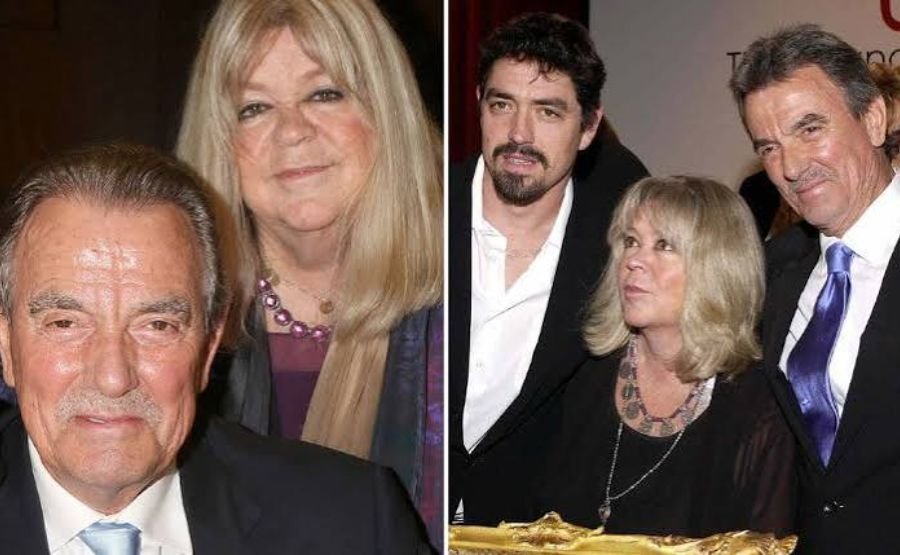
Eric Braeden lost his Pacific Palisades residence of 45 years in the Palisades Fire and was left devastated. At first, a fire official told Braeden’s wife that the wildfire was heading west and not to worry. Moments later, Braeden said he saw flames burning nearby. “Within 20 minutes it was an inferno,” he explained.
Here’s what I think about when I read that detail: she was in the house. She got that reassurance. She was part of the last hours before forty-five years of accumulated life — art, photographs, the textures of a marriage and a family — turned to ash. And then, as has been the pattern with this woman her entire adult life, what we hear from is Eric. Not Dale. Eric on CNN. Eric on Entertainment Tonight. Eric walking through the ruins with a camera crew.
When asked what he and his wife took during their evacuation, Braeden confessed that they packed until the very last minute.
That’s not criticism. That’s just the shape of their arrangement, and apparently it’s the shape she chose. But it makes the loss feel somehow doubly hers — she lost the home, and also remained invisible in the story of losing it.
The Contradictions Worth Naming
I need to acknowledge this directly. There are genuinely competing accounts of when she was born, where she was born, and what exactly her ethnicity is. Some sources say Swedish ancestry, some say French, some say both. One source says she has two children; every other source, including Eric Braeden’s own memoir and official biographies, confirms one: Christian.
The birth year discrepancy is real and unresolved. Most credible sources — the ones drawing from primary interviews — cluster around 1941 or 1942. The “1965” date that shows up on at least one site is demonstrably wrong and was apparently generated by an algorithm that confused a data field.
I don’t think any of this confusion reflects badly on Dale. She hasn’t corrected the record because she hasn’t engaged the record at all. She’s just living her life somewhere in Los Angeles, and the internet is out here inventing a General Hospital career for her.
Final Words
Dale Russell Gudegast is not an icon. She’s not “remarkable” in the way that word gets tossed at every private celebrity wife to avoid actually saying anything. She’s also not simply a footnote in Eric Braeden’s story, which is the other failure mode.
She’s a person who makes choices. She chose the art major over a conventional path. She chose the immigrant actor without the safety net of a career yet. She chose a name that her husband himself stepped away from professionally. She chose private work — design, creativity on her own terms — over visibility. She helped raise a filmmaker of real ability. She absorbed the grief of her sister’s family tragedy without it becoming part of the public story. And she spent 45 years building a home that the earth took back in 20 minutes of fire.
There’s no redemptive arc here. No comeback story. No dramatic revelation. That’s kind of the point. Some lives are just — durable. Textured. Held together by choices the person in question never needed you to see or applaud.
The internet’s version of Dale Russell Gudegast is a vague warm figure defined entirely by her proximity to a famous man. The actual version seems more interesting: a woman with an art background, a complicated family history, genuine aesthetic sensibility, and an almost pathological resistance to being known publicly. In a city that considers invisibility a failure, she chose it anyway.
That’s worth something. I’m not entirely sure what. But it’s worth something.
FAQs
1. Who is Dale Russell Gudegast?
She’s the wife of Eric Braeden, the actor known for playing Victor Newman on The Young and the Restless since 1980. She’s also an art-trained former actress, interior and pillow designer, and the mother of filmmaker Christian Gudegast. She married Braeden in 1966 and has lived almost entirely out of the spotlight since — which, given the state of celebrity internet coverage, may actually be the wisest decision she ever made.
2. How did Dale Russell Gudegast and Eric Braeden meet?
At Santa Monica College in the early 1960s. He was studying political science and playing semi-pro soccer. She was an art major. By his own account, she was well-educated and deeply versed in European literature. They were college sweethearts — the real kind, not the retrospective kind.
3. When did they get married?
October 8, 1966. That date is consistent across the most reliable sources. They’ve been married nearly six decades.
4. How old is Dale Russell Gudegast?
Depending on which birth year you trust — and the online record is genuinely a mess — she is in her early-to-mid eighties as of 2026. The most commonly cited birth years are 1941 and 1942.
5. Does Dale Russell Gudegast have children?
One son: Christian Gudegast, born February 1970 in Los Angeles. Some sites claim two children; this appears to be an error. Christian is a screenwriter and director, known for Den of Thieves and London Has Fallen.
6. What movies or TV shows has Dale Russell Gudegast appeared in?
Verifiably: a minor role in Holiday in the Sun (2001), the Mary-Kate and Ashley Olsen film. Some sources claim longer screen careers involving General Hospital or The Love Boat — these appear to be AI-generated fabrications with no basis in any verified filmography.
7. What does Dale Russell Gudegast do for work?
She ran an interior design and pillow design business. She’s been reported as an artist and designer. These are consistent with her art-major background. She has not held a prominent public-facing career.
8. Who is Dale Russell Gudegast’s sister?
The late Sigrid Valdis, an actress best known for playing Hilda on Hogan’s Heroes. Sigrid was married to Hogan’s Heroes star Bob Crane, who was murdered in 1978. Dale’s connection to that tragedy is real and almost entirely absent from the standard coverage of her life.
9. Did Dale and Eric Braeden lose their home in the 2025 wildfires?
Yes. The January 2025 Palisades Fire destroyed their Pacific Palisades home — a property they’d lived in for 45 years. Braeden described being devastated and said they’d been told by a fire official the blaze was moving the other direction, only to watch it become an inferno within minutes. As of early 2025, they were facing insurance complications about rebuilding.
10. Why is there so much wrong information about Dale Russell Gudegast online?
Because she gives almost no interviews, maintains no public social media presence, and has never chosen to actively manage her own public narrative. That vacuum gets filled by content farms and AI generators that copy from each other, cite nothing, and invent details wholesale. At least three different birth years, two different birthplaces, and a fabricated 20-year soap opera career circulate as “facts” about her across dozens of sites.
11. What do we actually know about her personality, from primary sources?
Barely anything, and that’s the honest answer. Eric Braeden has called her “a forgiving, understanding woman and a wonderful mother.” A 1997 account describes her calling him “endearing as no one else can be” for bringing her wildflowers on his runs. She was apparently instrumental, alongside Christian, in convincing Braeden to accept the Titanic role. Beyond those scraps — genuinely almost nothing verified. She’s chosen opacity, and it’s held.
Uncover something new with every read at The Hidden Magazine.



One Comment