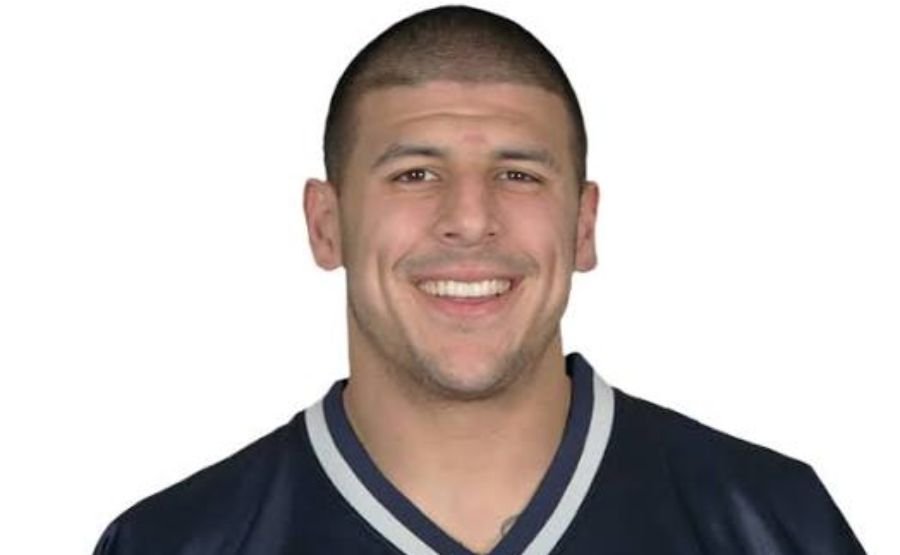
Aaron Hernandez: An NFL Star’s Ascent and Decline
Here’s the thing that should bother you more than it does: Aaron Hernandez died a convicted murderer in April 2017. By July 2017, a Massachusetts judge vacated that conviction. Not because of new evidence. Not because anyone decided he was innocent. Because of a colonial-era legal doctrine called abatement that says if you die before you’ve exhausted your appeals, the conviction is wiped from the record.
Odin Lloyd is still dead. The conviction is gone. Both of those things are simultaneously true, and the legal system just… let that stand.
Quick Bio
| Detail | Info |
| Full Name | Aaron Josef Hernandez |
| Born | November 6, 1989, Bristol, Connecticut |
| Parents | Dennis Hernandez (died January 2006, hernia surgery complication); Terri Hernandez |
| Ethnicity | Puerto Rican (paternal); Italian-American (maternal) |
| College | University of Florida; 2009 national championship team |
| NFL | New England Patriots; drafted round 4, pick 113, 2010 |
| Contract | 5-year, $40 million extension signed August 2012 — largest ever for a tight end |
| Arrested | June 2013, charged with murder of Odin Lloyd |
| Odin Lloyd connection | Lloyd was dating Shaneah Jenkins — sister of Hernandez’s fiancée Shayanna Jenkins |
| Murder conviction | First-degree murder, June 2015; sentence: life without parole |
| Double murder trial | Acquitted April 14, 2017 in the de Abreu/Furtado double murder case |
| Death | April 19, 2017, Souza-Baranowski Correctional Center; ruled suicide by hanging |
| Conviction status | Posthumously vacated in July 2017 in accordance with the Massachusetts abatement doctrine |
| CTE diagnosis | Stage 3 of 4 at death; most severe ever found in a person under 46 |
| Daughter | Avielle Hernandez, with Shayanna Jenkins |
Let’s establish something before we go any further. There is no clean narrative here. Every version of the Aaron Hernandez story has been tailored — by the prosecution, by the defense, by Netflix, by the NFL, by the people who loved him, and by the people who despised him — and every single one of those tailored versions leaves something essential out.
The version where he was a troubled kid done in by bad influences and a homophobic sports culture? Real factors, incomplete picture. The version where he was just a thug who wasted a gift? Ignorant of what we now know about his brain. The version where CTE explains everything? Dr. Ann McKee said herself she couldn’t connect the dots. The version where he was a victim? Tell that to Odin Lloyd’s family.
You can hold all of these at once. Most coverage can’t.
January 6, 2006 — The Date That Actually Started This
Dennis Hernandez was supposed to have routine hernia surgery. At 49, he passed away on the table.Aaron was sixteen.
If you read enough about Aaron Hernandez — and I have — you’ll find this date cited in virtually every serious account as the inflection point. Not as a sympathetic excuse but as a factual pivot around which everything else organized itself. His high school coach described the period after as watching someone lose their structure in real time. ESPN’s Elizabeth Merrill wrote that after his father died, “Hernandez became quieter, showed less emotion.” The Bristol jail sheriff said Dennis was “the ballast that kept him on course.” Multiple friends said Aaron never got over it.
Here’s what makes this more complicated than a simple grief narrative: Dennis Hernandez was not a straightforwardly good man. He pushed his boys to extremes. He was described as having a volatile relationship with Terri. He was, by multiple accounts, rigidly homophobic — and Aaron, from at least middle school according to Dennis SanSoucie, was in a sexual relationship with another boy that he was “extremely terrified” his father would discover.
So the man whose death supposedly derailed Aaron’s life was also the man whose rigid masculinity and homophobia may have been structuring Aaron’s most fundamental self-suppression. That’s the kind of psychological knot that doesn’t untangle easily, and the coverage rarely sits with it for more than a paragraph.
See also “Who Is Vera Davich? The Untold Story of Scott Patterson’s First Wife and Her Private Life“
The $40 Million Contract and the Ten-Month Window
He signed the extension in August 2012.largest tight end deal ever awarded.He was twenty-two years old with a brain that researchers would later say was already severely damaged for someone his age.
Ten months later, Odin Lloyd was shot six times in an industrial park in North Attleborough, Massachusetts. Lloyd’s phone was found near his body. The last contact had been with a number saved as “double murder” — Aaron Hernandez.
Think about what was happening in those ten months. By most accounts he was still involved with associates from Bristol who were, to put it charitably, not trying to help him stay out of trouble. He was using PCP. He had surveillance cameras installed throughout his mansion, which prosecutors would later use against him because the footage showed him with a gun the night of the murder. He had a car cleaned at 2 AM.
The money didn’t change anything. That’s the uncomfortable fact. A four-hundred-dollar-a-game kid from Bristol Connecticut got a forty-million-dollar contract and was still moving through the same social geography he’d been navigating since his father died. The money didn’t buy his way out of his own head. It just gave him a nicer house to install security cameras in.

The Odin Lloyd Connection Nobody Fully Explores
Odin Lloyd was not a stranger.He was seeing Shaneah Jenkins, the sister of Shayanna Jenkins, the mother of Aaron Hernandez’s daughter and fiancée. These were people at family gatherings together. People who presumably sat at the same tables.
Prosecutors argued Hernandez killed Lloyd because Lloyd had been talking about Hernandez’s drug use and possibly his sexuality to people Hernandez didn’t want to know. The sexuality motive got amplified by the Netflix documentary Killer Inside, which connected it to the claim — made without supporting evidence — that Lloyd was killed specifically because he knew about Hernandez’s sexual history.
Jose Baez, Hernandez’s own attorney, publicly regretted participating in the documentary after it aired. He said producers lied to his face. He objected specifically to how his client’s sexuality was handled as a causal explanation.
Here’s the honest position: we don’t know why Lloyd was killed. We know Hernandez did it. We know the crime was premeditated. We know Lloyd’s final text to his sister referenced being with a “new england” person — understood to mean Hernandez. We know that’s where the documented evidence ends and the theorizing begins.
The sexuality-as-motive theory is compelling and unproven. The CTE-explains-the-violence theory is suggestive and explicitly disavowed by the scientist who conducted the analysis. Both make for better television than “we don’t fully know.”
The Brain Nobody Could Explain
November 9, 2017. Seven months after he hanged himself in his cell. Dr. Ann McKee stood at a conference at Boston University and showed slides comparing Aaron Hernandez’s brain to a normal twenty-seven-year-old’s.
The outside of his brain looked normal. The inside was, in her words, riddled with CTE. Stage 3 of 4. Large holes in the brain’s membrane. Atrophy in the hippocampus. Damage to the frontal lobe — the region involved in impulse control, judgment, and behavior. The next youngest person they’d found with Stage 3 CTE damage was 46 years old. His lawyer said the damage was consistent with a player with a median age of 67.
McKee was careful. She said explicitly she could not “connect the dots” between the CTE and his behavior. She said people with severe CTE have difficulty with impulse control, decision-making, aggression, and emotional volatility — she said it collectively, as a category. She was not diagnosing cause.
Let me be honest: this is the most uncomfortable part of the whole story. Not because CTE explains the murders. It doesn’t explain anything definitively. It’s uncomfortable because Aaron Hernandez stopped playing football at twenty-three. Twenty-three. The damage that a medical researcher would describe as “one of the most significant contributions to our work” accumulated before he was old enough to rent a car without extra fees.
He played youth football. High school football. College football. Three NFL seasons. He was done at twenty-three. And somehow, despite all the known research about repetitive brain trauma and football, his attorneys never raised CTE in his defense. Not once, at either trial.
The Acquittal Five Days Before He Died
Here’s the timeline that people consistently blur. There were two separate murder cases.
The Odin Lloyd murder: convicted June 2015. Life without parole. That’s the case everyone knows.
The double murder of Daniel de Abreu and Safiro Furtado outside a Boston nightclub in July 2012: separate trial, separate jury. On April 14, 2017, that jury acquitted him.
Five days later, on April 19, 2017, Aaron Hernandez was found hanging in his cell at Souza-Baranowski Correctional Center. He had stuffed cardboard into the door’s track to prevent it from being opened. He had written passages from John 3:16 in his blood on his forehead. He had written a note to Shayanna. He had sent his daughter a note. He had written a note to his prison boyfriend.
The acquittal on the double murder charge came five days before he killed himself. He still had a life sentence for Lloyd. He was never getting out.
The notes he left behind suggested a man who was saying goodbye deliberately. Whether the acquittal accelerated that decision, or whether it was already made, nobody knows.
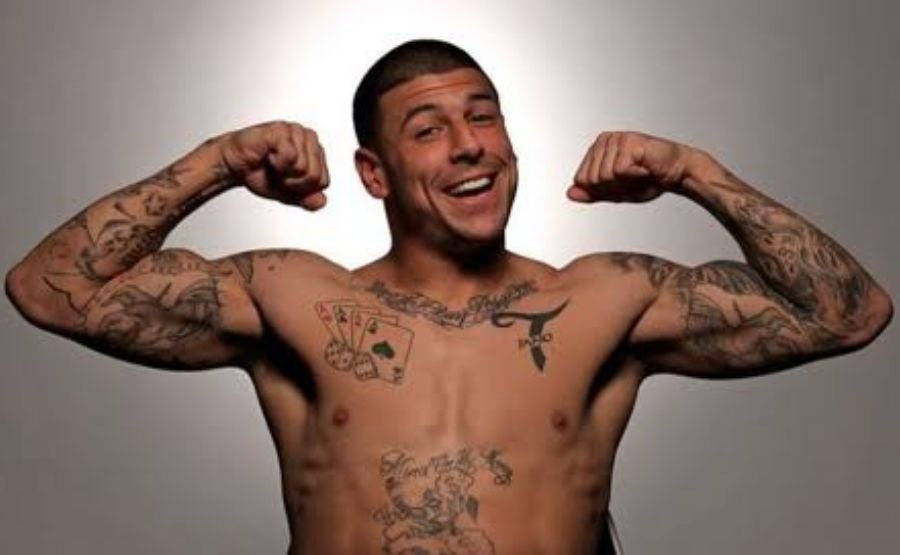
What the Abatement Did — And Didn’t — Do
Under the Massachusetts doctrine of abatement, when a criminal defendant dies before exhausting their appeals, the conviction is vacated. The logic — a relic of colonial common law — is that a dead person cannot pursue their appeals. In July 2017, a judge vacated Aaron Hernandez’s first-degree murder conviction.
This is the legal reality. Hernandez’s family and his estate benefited from this — the vacated conviction meant that challenges to his football contract and any damage claims related to the Lloyd case became legally complicated.
Let’s be clear about what abatement did not do: it did not address guilt or innocence. It did not comfort Ursula Ward, Odin Lloyd’s mother, who has had to live with both her son’s death and the subsequent erasure of the legal finding that named his killer. She told media she was devastated by the vacature.
The conviction existed for two years. The evidence didn’t change. The jury’s decision didn’t change. A procedural doctrine erased the official legal record because Aaron Hernandez’s appeals were pending when he died.
My Verdict
Aaron Hernandez was a murderer with a Stage 3 CTE brain, a repressed identity in a homophobic environment, a father who died when he was sixteen, and a forty-million-dollar contract that arrived before he had any architecture to hold it. None of those facts excuse what happened to Odin Lloyd. All of them matter if you want to understand anything real about how it happened.
The easy version — thug with talent who made terrible choices — skips the brain. The sympathetic version — victim of systems and sport — doesn’t sit in that industrial park in North Attleborough and account for what happened to a 27-year-old named Odin who was simply dating the wrong person’s fiancée’s sister.
The honest version is that all of these things were true simultaneously and none of them fully explain each other. That’s not satisfying. It shouldn’t be.
FAQs
1. Was Aaron Hernandez’s conviction vacated?
Yes. Under Massachusetts’ abatement doctrine, his first-degree murder conviction for killing Odin Lloyd was vacated in July 2017 after he died before exhausting his appeals. This did not mean he was found innocent — it was a procedural outcome that erased the legal conviction while leaving the factual evidence unchanged.
2. Did Aaron Hernandez have CTE?
Yes. Dr. Ann McKee of Boston University’s CTE Center confirmed Stage 3 of 4 CTE at autopsy in September 2017. It was the most severe case ever found in someone under 46 years old. His lawyers described the damage as equivalent to a player with a median age of 67.
3. Why did Aaron Hernandez kill Odin Lloyd?
The precise motive was never definitively established. Prosecutors argued it was to silence Lloyd, who may have known things about Hernandez’s personal life, including his drug use. The Netflix documentary Killer Inside suggested Lloyd was killed because he knew about Hernandez’s sexuality — a theory his own attorney Jose Baez publicly disputed after the documentary aired.
4. Was Aaron Hernandez gay?
His sexuality was never confirmed by him or definitively established. Dennis SanSoucie, his high school quarterback, told the Netflix documentary Killer Inside that they had a sexual relationship from seventh grade through junior year of high school. His fiancée Shayanna Jenkins said he never disclosed to her that he was gay or bisexual. The evidence suggests he was at minimum bisexual and deeply closeted throughout his life.
5. What happened to Aaron Hernandez’s daughter?
Avielle Hernandez, his daughter with Shayanna Jenkins, was born in November 2012. She was about four years old when he died. His estate, through a lawsuit against the NFL and helmet manufacturer Riddell, pursued damages on her behalf citing loss of companionship.
6. What was the result of the double murder trial?
On April 14, 2017, Hernandez was acquitted of the 2012 double murder of Daniel de Abreu and Safiro Furtado outside a Boston nightclub. He was acquitted five days before he died.
7. How did Aaron Hernandez die?
He hanged himself on April 19, 2017, in his cell at Souza-Baranowski Correctional Center in Lancaster, Massachusetts. He stuffed cardboard into his door to prevent it from being opened. He left notes to Shayanna Jenkins, his daughter, and his prison boyfriend. His death was ruled a suicide.
8. Did CTE cause Aaron Hernandez to commit murder?
Dr. McKee explicitly said she could not “connect the dots” between his CTE diagnosis and his behavior. CTE is associated with impaired impulse control, aggression, and decision-making but is not established as a direct cause of violent crime. Hernandez never raised CTE in his legal defense at either trial.
9. How much money did Aaron Hernandez make?
He signed a five-year, $40 million extension with the New England Patriots in August 2012 — the largest contract ever given to a tight end at the time. He was arrested and charged with murder ten months later. The Patriots released him immediately after his arrest.
10. When did Aaron Hernandez’s father die?
Dennis Hernandez died on January 6, 2006, from complications following what was supposed to be routine hernia surgery. He was 49. Aaron was sixteen. Multiple people close to Hernandez described his father’s death as the turning point that accelerated his involvement with dangerous associates.
11. Why wasn’t CTE used as a defense in Aaron Hernandez’s trial?
It wasn’t raised in either of his trials. The CTE finding was only revealed posthumously. His attorneys instead filed civil lawsuits against the NFL and helmet manufacturer Riddell after his death, arguing the league failed to warn him about the dangers of repetitive brain trauma. Why it wasn’t raised as a defense during the criminal proceedings is one of the unanswered questions of his legal case.
Uncover something new with every read at The Hidden Magazine.



One Comment