Ana Leza: Biography, Age, Career, Marriage, and Personal Life
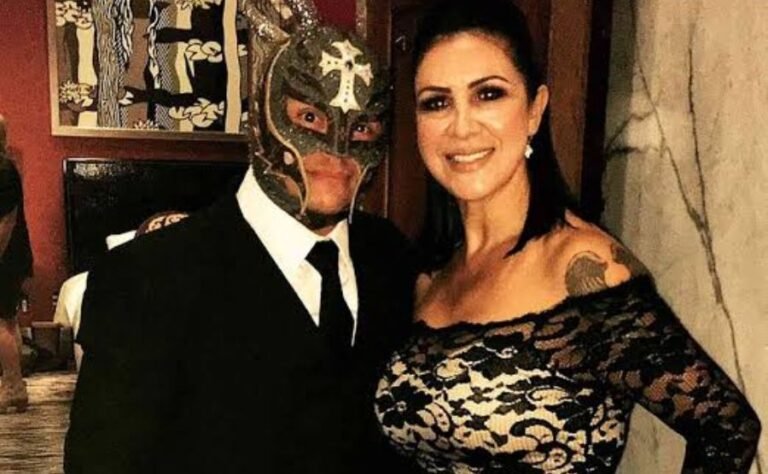
Carmen Maura was a witness at Ana Leza’s wedding — both of them. Pedro Almodóvar was also in the pews when she wed Antonio Banderas in 1987 at Madrid’s Church of San Nicolás.The second, thirteen years later, when she married Christopher Lee Villareal, a documentary editor from Ojai, California, in Santa Barbara. The same woman, both times, watching over both chapters of Ana Leza’s life. That detail tells you something significant about the actual social world Ana Leza inhabited: she was not a peripheral figure in the Madrid creative scene of the 1980s. She was central enough to have Carmen Maura — one of the defining actresses of Spanish cinema’s international breakthrough — as her loyal friend across decades. You would never know this from the content that dominates search results for her name, which describes her almost exclusively as “Antonio Banderas’ first wife” and then fills column inches with invented sentences about her net worth and spiritual journey. She deserves better than that, even if she clearly doesn’t want it.
Quick Bio
| Detail | Info |
| Full name | Ana Arana Leza |
| Born | 1962, Madrid, Spain (January 1 is a content farm placeholder; real date unknown) |
| Family | Daughter of actress Concha Leza; sister Elena married to director Achero Mañas; niece Laura acts as Gala Amyach |
| Career | Film actress, 1984–1994; notable in Almodóvar’s Women on the Verge of a Nervous Breakdown (1988) |
| First marriage | Antonio Banderas, July 27, 1987–1996; at Church of San Nicolás, Madrid; Maura and Almodóvar attended |
| Divorce settlement | Madrid apartment ~€3.4M + ~€12,000/month alimony for 3.5 years (¡HOLA! reported) |
| Second marriage | Dharma Villareal (Christopher Lee Villareal), November 26, 2000, Santa Barbara; Carmen Maura again as witness |
| Children | Clara María (Clara Priya) Villareal and Sofía Macarena (Sofia Sindhu) Villareal |
| Current life | Active in Siddha Yoga Meditation (SYDA) community; reported to live in South Fallsburg, NY |
| Last acting credit | Of Love and Shadows (1994), as Evangelina |
She was present in the room where it took place
Let’s set the scene for the 1988 release of Women on the Verge of a Nervous Breakdown before continuing.Pedro Almodóvar made that film during the Movida Madrileña — the creative explosion that followed Franco’s death and transformed Spanish arts. It was a film that would become Spain’s first major international art-house hit, earn an Oscar nomination for Best Foreign Language Film, and introduce a generation of Spanish actors to global audiences. Antonio Banderas was in it. Carmen Maura was in it. And Ana Leza was in it.
Her role wasn’t the lead. However, she was there in a significant movie at a significant period, in the group that, for the first time in a generation, made Spanish cinema readable on a global scale.She wasn’t on the sidelines. She was working.
Her mother, Concha Leza, had been a respected Spanish stage actress. Ana grew up backstage. Her sister Elena married director Achero Mañas — whose daughter Laura, Ana’s niece, became an actress in 2019 under the name Gala Amyach. This is a family for whom performance is generational and structural. Ana Leza didn’t fall into acting because she married an actor. She was already there.
See also “Laura Deibel: Biography, Age, Marriage, Divorce, and Personal Life“
The Translation That Changed Film History
Here’s the story almost everyone misses or mentions once and never examines. Antonio Banderas landed the role in The Mambo Kings (1992) — his English-language Hollywood debut — in significant part because Ana Leza translated the screenplay for him. Banderas spoke little English at the time. He has confirmed this publicly. He said, essentially, that without her translation work he would not have gotten the part.
Think about what this means. The Mambo Kings launched Banderas in America. From that came Philadelphia (1993), Interview with the Vampire (1994), Desperado (1995), the entire Hollywood trajectory that made him one of the defining stars of the 1990s. It has a hinge point. That hinge point is his first wife sitting down and doing the unglamorous work of translating a screenplay so he could understand what he was being asked to play.
The French Wikipedia entry on Ana Leza notes this specifically — Banderas estimated he would never have gotten the role without her help translating the script. That is not a footnote. That is a load-bearing fact in the history of 1990s Hollywood, and the English-language internet has largely buried it.

What the Divorce Actually Looked Like
The divorce was finalized in 1996. The relationship with Melanie Griffith had been developing since 1995 on the set of Two Much, the Fernando Trueba film. Banderas was still married to Ana when he and Griffith started — a fact multiple sources acknowledge briefly and move past quickly. By early 1996, Ana and Antonio had separated. Banderas married Griffith in London in May 1996.
The ¡HOLA! piece from February 2020 — the most substantive Spanish-language source on Ana Leza — gives the clearest account of the settlement. “After a court battle,” it states, Ana received a Madrid apartment valued at 3.4 million euros and alimony of approximately 12,000 euros per month for three and a half years. That is a serious settlement. That is the settlement of a woman whose lawyers knew she had contributed substantively to her husband’s career over nine years and made sure it was acknowledged financially.
Let me be honest about something. Most content about Ana Leza describes the divorce as “amicable.” There is no particular evidence for this. What we know is that it went through the courts, involved a battle, and resulted in significant financial resolution. ¡HOLA! says “tras una batalla en los tribunales” — after a court battle. “Amicable” is a projection onto a process that wasn’t.
The Films Nobody Names Correctly
The content farms have a specific problem with Ana Leza’s filmography. One site calls Philadelphia is referred to as “Philly” on the website. Of Love and Shadows is often referred to as “Of Love and Darkness.” “Ladies on the Brink of a Nervous Breakdown” is how another characterizes Women on the Verge of a Nervous Breakdown. These are indicators that no one writing about her has actually looked up her films, not translation faults. They’re running her name through a template and filling in what seems plausible.
Her actual filmography, assembled from IMDB and the French Wikipedia: first TV credit reportedly 1984, Teresa de Jesús. Then El placer de matar (1988), Women on the Verge of a Nervous Breakdown (1988), Hay que zurrar a los pobres (1991), La reina anónima (1992), Sublet (1992), an uncredited appearance in Philadelphia (1993) and Of Love and Shadows (1994, directed by Betty Kaplan, in which she portrayed Evangelina, sometimes referred to as “Anita Lesa”).
The Philadelphia cameo is interesting. It’s the most famous film she appeared in, and she accepted an uncredited role. By 1993 she was already stepping back from her own career, appearing in her husband’s American productions in marginal capacities while he became the star. The trajectory of what was happening to her career in parallel with his is visible in that credits list, if you look.
Carmen Maura as the Connective Thread
I keep coming back to Carmen Maura. Witness at the first wedding. Witness at the second. Think about what that continuity means. The first wedding was in 1987, at the height of the Almodóvar circle’s cultural moment. Almodóvar himself was there. This was not a private ceremony that happened to involve famous people — this was a gathering of the people making Spanish cinema internationally significant, and Ana Leza was the bride.
By the second wedding, in 2000 in Santa Barbara, the context had completely changed. Banderas was a Hollywood star. Ana had stopped acting. The Madrid creative world of the 1980s was years in the past. But Maura was still there. Still the witness. That’s friendship across fifteen years of enormous change — divorce, relocation, total life reinvention — which tells you something about who Ana Leza is as a person. Someone whose relationships have real continuity, not the transactional kind that entertainment industry connections usually produce.

The Siddha Yoga Piece, Handled Carefully
Multiple sources confirm that Ana Leza and her second husband Dharma Villareal became involved with Siddha Yoga Meditation — a spiritual organization founded by Swami Muktananda with an ashram in South Fallsburg, New York, in the Catskills. Clara Priya and Sofia Sindhu, their kids’ spiritual names, match names given in that culture.
I want to handle this carefully because Siddha Yoga has a complicated history. There have been documented allegations of cult-like dynamics and abuse within the organization, particularly involving its leadership. Investigative journalism has covered this over the years. Whether Ana Leza and her family are aware of or have any relationship to these controversies is unknown from available sources, which simply note her involvement without further detail.
What I can say is this: a woman who went through a highly public divorce after her husband left for someone more famous, who stopped acting, who moved countries and built a new life in a spiritual community, is not a simple figure to summarize. She chose withdrawal. She chose depth over visibility. Whether the specific community she chose was the wisest choice is not something I can assess from here, and it would be dishonest to pretend otherwise.
The Birthdate That Doesn’t Exist
The January 1, 1962 birthdate that circulates everywhere for Ana Leza almost certainly isn’t real. IMDB, which is generally reliable on basic biographical data, lists her birth location but not a specific birth date. “January 1” is a database placeholder that content farm databases use when a person has a birth year but no exact day. It has since been used repeatedly across so many sites that it reads as fact.
Her actual birthdate is not publicly available. Born 1962 in Madrid is the verified claim. Everything more specific is speculation dressed as biography.
My Actual Judgment
Ana Leza did something unusual and, I think, quietly brave: she walked away from a career that had been intertwined with her marriage, absorbed a difficult and public ending, rebuilt her life around different values, and has maintained real privacy in a media environment that has spent thirty years trying to define her solely in terms of the man she married at 25.
She was a real actress. She was in an Almodóvar film at the moment that mattered. Her husband’s Hollywood career may have started because of the translation work she conducted, which he has recognized but the internet has mostly disregarded. She took what the courts gave her, which was not nothing, and she made a life.
She is accurately described everywhere as the “former wife of Antonio Banderas,” although this description is incredibly inadequate.It tells you about one chapter of a life that has had several others. The fact that she doesn’t seem to want to change the record—no memoir, no interviews, no public correction of the lies about her birthday or her movies — is itself consistent with the choice she seems to have made: to be finished with the version of herself the entertainment world produced.
Carmen Maura knew her before the fame and after it. That’s probably the best measure of who she actually is.
See also “Vanessa Britting: Biography, Age, Career, Husband, and Personal Life”
FAQs
1. Who is Ana Leza?
A Spanish actress born in 1962 in Madrid, daughter of theater actress Concha Leza. She appeared in Almodóvar’s Women on the Verge of a Nervous Breakdown (1988) and other Spanish films of the late 1980s and early 1990s. She was married to Antonio Banderas from 1987 to 1996. Her last acting credit was Of Love and Shadows (1994).
2. Why is Ana Leza famous?
Primarily because she was Antonio Banderas’ first wife. Less talked about: Banderas has given her credit for translating the screenplay for The Mambo Kings, a role he claims he couldn’t have obtained otherwise, and she starred in a seminal Almodóvar movie.
3. When did Ana Leza and Antonio Banderas get married?
July 27, 1987, at the Church of San Nicolás in Madrid. Pedro Almodóvar and Carmen Maura attended. They had dated roughly six months before the wedding.
4. Why did Ana Leza and Antonio Banderas divorce?
Divorced in 1996. While still married to Ana, Banderas got to know Melanie Griffith on the production of Two Much (1995). The divorce went through the courts — ¡HOLA! describes it as having involved a “court battle.” Banderas and Griffith married in May 1996, the same year the divorce was finalized.
5. What did Ana Leza receive in the divorce?
Per ¡HOLA!reporting: an apartment in Madrid worth about €3.4 million, plus three and a half years of alimony of about €12,000 a month.This followed a court battle, not an amicable arrangement.
6. Who is Ana Leza’s current husband?
Christopher Lee Villareal, known as Dharma Villareal. A film editor and documentarian from Ojai, California. They married November 26, 2000, in Santa Barbara. Carmen Maura was the witness at this wedding as well.
7. Does Ana Leza have children?
Yes. Two daughters with Dharma Villareal: Clara María (spiritual name Clara Priya Villareal) and Sofía Macarena (Sofia Sindhu Villareal). The spiritual names reflect the family’s involvement in Siddha Yoga Meditation.
8. What Almodóvar film was Ana Leza in?
Women on the Verge of a Nervous Breakdown (1988), which was nominated for the Academy Award for Best Foreign Language Film and was central to Almodóvar’s international breakthrough.
9. Is Ana Leza still acting?
No. Her last credited film role was in Of Love and Shadows (1994). After the divorce, she gave up acting and hasn’t seen on television since.
10. What is Ana Leza’s connection to Siddha Yoga?
She and her husband are devotees of Siddha Yoga Meditation (SYDA), with an ashram in South Fallsburg, New York. Their daughters have spiritual names from within that tradition. Siddha Yoga has faced documented controversy involving its leadership; how this affects Ana Leza’s involvement is not publicly documented.
11. Did Ana Leza appear in Philadelphia?
Yes, in an uncredited cameo in Jonathan Demme’s 1993 film starring Tom Hanks and Denzel Washington. By this point her own career was being substantially subordinated to her husband’s.
Uncover something new with every read at The Hidden Magazine.