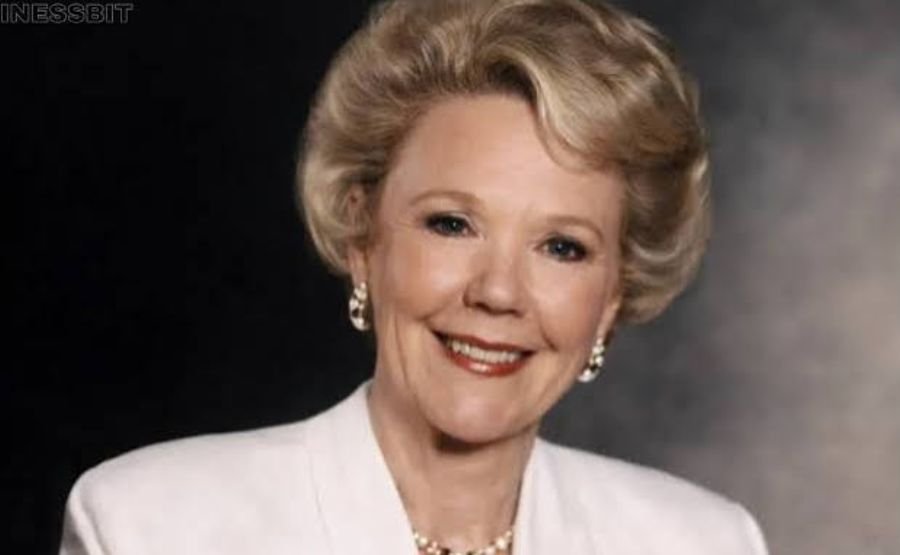
Marilyn Kroc Barg Children: Family, Personal Life, and Untold Story
Marilyn Kroc Barg’s name alone isn’t the search keyword that most people use to find her. “Marilyn Kroc Barg children” is what it is. And the truth is that she didn’t have any, which is what the content ecosystem tries so hard to avoid saying outright. At least, none that appear in any public record, any newspaper, any genealogical database, or her own 1973 obituary in the Chicago Tribune.
She was 48 years old when she died of diabetic complications in Arlington Heights, Illinois. The Tribune obituary listed her husband, her father, and her late mother. No children. The FindAGrave entry lists husband James W. Barg. No children. The question keeps generating search traffic because people assume that the only child of a billionaire must have left children behind. The assumption is wrong.
Quick Bio
| Item | What’s verified | What’s invented or murky |
| Born | October 15, 1924, Chicago, Illinois | Solid — FindAGrave and Chicago Tribune |
| Known as | “Lynn” — her preferred name | Most coverage ignores this entirely |
| Parents | Ray Kroc (father); Ethel J. Kroc née Fleming (mother) | Solid |
| First marriage | Sylvester Nordly Nelson, 1949, Cook County | Confirmed by genealogical record |
| Second marriage | Walter James “Jim” Barg, 1960–1973 | Solid — Chicago Tribune obituary names “James W.” |
| Death | September 11, 1973, Arlington Heights, Illinois, age 48 | Confirmed by primary records |
| Cause | Diabetic complications | Consistent across credible secondaries |
| Buried | Memorial Park Cemetery, Skokie, Illinois | FindAGrave primary |
| Children | None confirmed in any primary record | Farm pages say “no children”; one page claims she “passed away in 2003 at 74” — completely wrong |
| Ronald McDonald House | She died in 1973; first RMHC house opened 1974 | Multiple pages falsely claim she supported or co-founded it |
| Husband’s first name | Walter James — nickname Jim or James | One page calls him “Waldo” — wrong |
| Net worth at death | Estimated $600,000 in 1973 | Unverifiable; seems plausible given father’s wealth wasn’t fully realized yet |
She Went by Lynn. Nobody Mentions This.
Start there, because it tells you something. The Chicago Tribune obituary from September 13, 1973 says “Lynn J. Barg, nee Kroc.” Not Marilyn. Not Janet. Lynn. That was the name her family used for her, the name attached to her death notice in the paper that covered her father’s empire.
The content ecosystem decided to call her Marilyn because that’s what shows up in genealogical headers and formal birth records. They’re not wrong that Marilyn Janet Kroc was her full name. They’re just missing the detail that the woman herself went by something else. A nickname. A private name. The kind of thing that suggests someone who, even in the small ways available to her, tried to be her own person.
Her father, the most recognizable name in American fast food, didn’t even die for another eleven years. She predeceased him at 48. He lived ten years longer than his only child.
The Ronald McDonald House Problem
This one irritates me because it’s everywhere and it’s literally impossible.
Multiple pages describe Marilyn Kroc Barg as someone who “contributed to Ronald McDonald House Charities” or who “played a role in establishing” RMHC. Some of the more breathless ones put her at the center of the charity’s founding mythology.
Here’s the timeline problem. The first Ronald McDonald House opened in Philadelphia in 1974. Marilyn Kroc Barg died September 11, 1973. She died before the first house opened. She didn’t contribute to something that didn’t exist yet.
The charity was actually started by Fred Hill, a Philadelphia Eagles tight end whose daughter was being treated for leukemia. He and team physician Audrey Evans founded it with support from McDonald’s franchisees in Philadelphia — not from Ray Kroc’s daughter, who was dead.
The farm pages built this narrative because the search ecosystem asks “what was Marilyn Kroc Barg known for?and McDonald’s altruism was the only intriguing-sounding response they could discover.So they invented a connection that’s chronologically impossible.
The Woman Who Married Twice and Is Described Both Times Vaguely
Her first husband was Sylvester Nordly Nelson. They married in Cook County in 1949 — she would have been 24. They divorced at some point before 1960. That’s all the public record offers. Nobody in any piece of coverage I found explains who Sylvester Nelson was, what the marriage was like, why it ended, where they lived. One name. One year. Gap.
Her second husband was Walter James Barg. The farm pages call him “Jim.” One page, trucofax.it.com, calls him “Waldo” — a name that appears in no other source and seems to have been invented by whatever system generated that page. The Chicago Tribune obituary says “James W.” They married in 1960. By 1973 she was dead and he was a widower.
Walter James Barg apparently outlived Marilyn by eleven years, per one secondary source. That’s about the only thing anyone knows about him beyond his name. He was married to the only child of the man who built McDonald’s and the public record treats him as a footnote.
The Death Year Confusion That Reveals the Machine
One page — online-events.itsnicethat.com — says “Marilyn Kroc Barg passed away in 2003 at the age of 74.” This is wrong in every way available to a fact to be wrong. She died September 11, 1973. She was 48. She’s buried in Skokie. The Chicago Tribune ran her death notice. There is a FindAGrave memorial with her dates.
The “2003” death year appears to have been copied from some confusion with another person — possibly a stepchild of Ray Kroc’s through his marriages, or a genealogical record that got cross-referenced incorrectly. The age of 74 in 2003 would work out to a birth year of approximately 1929 — so not even consistent with Marilyn’s real birth year of 1924. The machine just put numbers near her name that were numerically plausible and moved on.
This is the Boaz Dov Wong problem, the Milaine Desaulniers problem, the Johanna Samberg problem — a name generates traffic, the machinery fills the vacuum, and the fill bears no relationship to the original person.
What Her Father’s Empire Was Worth When She Died
Here’s a piece of context that most coverage misses entirely. Ray Kroc bought McDonald’s corporation outright in 1961 for $2.7 million. He built it into something worth much more — but the truly astronomical wealth came later. When Marilyn died in 1973, the McDonald’s corporation was a major company but Ray Kroc wasn’t yet the billionaire legend he would become in the late 1970s and 1980s. He bought the San Diego Padres in 1974, the year after Marilyn died.
The $600,000 net worth estimate one farm page assigns to her at death doesn’t strike me as crazy. It’s possible she had assets from her father, from whatever work she did, from the marriages. But she wasn’t inheriting a billion-dollar estate. The billions came after she was gone.
Think about that. She spent her entire adult life as “Ray Kroc’s daughter” without ever seeing what that name eventually became worth. The Golden Arches covered the globe after she died. The charity operations Joan Kroc would eventually fund with $1.5 billion in bequests — that was all after Marilyn’s time.
The Question of the Horses
Every source mentions horses. This is one of those details that appears consistently enough that I believe it — she loved horses, was involved in equestrian activities, and this was a known part of her life.
But here’s what the coverage does with that fact: nothing. They list it like a checkbox. “Passionate about horses: check.” Nobody explains what “equestrian” meant in her specific case. Was she a competitive show rider? Did she breed horses? Did she own a stable? Did she compete on the circuit? The record is silent.
In the mid-century American suburban landscape, horse ownership was a specific class signal. An upper-middle-class woman in Illinois in the 1950s and 1960s who was passionate about horses would have been embedded in a particular social world — not flashy, but grounded in land, animals, and a quieter kind of wealth. That’s the texture of her life the coverage consistently flattens.
My Verdict
Marilyn Kroc Barg — Lynn, to the people who knew her — had no children. She died at 48 of diabetic complications in suburban Illinois. She had been married twice, loved horses, and was buried in Skokie while her father still had eleven years of life left to live and billions of dollars yet to accumulate.
She didn’t found Ronald McDonald House. The first one opened after she was dead. She didn’t get to see what her father’s name eventually became worth. She lived as the only child of a man who was building something enormous, and she stepped back from it, and she died before the enormity arrived.
The question “did Marilyn Kroc Barg have children?” keeps getting searched because people assume there must be heirs, continuity, some biological thread connecting her to the present. There isn’t one. She’s the end of a direct line. Ray Kroc’s only child died without children. The McDonald’s fortune that eventually materialized went to Joan Kroc, the third wife, who gave extraordinary amounts of it away to National Public Radio and the Salvation Army and causes that had nothing to do with hamburgers.
That’s the story. It ends in Arlington Heights in 1973.
FAQs
1. Did Marilyn Kroc Barg have children?
No. Her 1973 Chicago Tribune obituary lists her husband and her father but mentions no children. Her FindAGrave entry lists no descendants. No genealogical database or primary source confirms children.
2. Why do people search for “Marilyn Kroc Barg children”?
Most likely because many believe there must be an heir or continuation because she was the sole child of one of the richest men in American business history. There isn’t one — at least not a biological one through Marilyn.
3. When did Marilyn Kroc Barg die?
September 11, 1973, in Arlington Heights, Cook County, Illinois. She was 48 years old. The cause was diabetic complications. One farm page incorrectly claims she died in 2003 at 74 — this is completely wrong.
4. Did she found Ronald McDonald House Charities?
No. The first Ronald McDonald House opened in Philadelphia in 1974 — one year after Marilyn died. The charity was co-founded by Philadelphia Eagles tight end Fred Hill and physician Audrey Evans. Marilyn is mistakenly credited with this on several pages, which is not conceivable in terms of chronology.
5. Who was Marilyn Kroc Barg’s husband?
She was married twice. First to Sylvester Nordly Nelson, in Cook County in 1949 — that marriage ended in divorce. Second to Walter James Barg (called “Jim” in some sources), whom she married around 1960 and who survived her. One page calls him “Waldo” — that name doesn’t appear in any primary source.
6. What did she go by in daily life?
“Lynn” — the Chicago Tribune death notice from September 13, 1973 reads “Lynn J. Barg, nee Kroc.” Her middle name was Janet; Lynn appears to have been her preferred day-to-day name.
7. Where is she buried?
Memorial Park Cemetery in Skokie, Illinois. Lauterburg & Dehler Funeral Home in Arlington Heights hosted private services.
8. Did she work at McDonald’s?
The public record is thin on this. Some sources describe her as having served on the McDonald’s board or being involved in “business activities” connected to the corporation. These claims have minimal sourcing and may be exaggerated.
9. What was she passionate about outside of her family connection?
Horses. Every credible source mentions equestrian interests as a genuine passion — whether recreational riding, competitive showing, or breeding. The specifics have never been well-documented.
10. What was her net worth when she died?
One source estimates $600,000 at the time of death in 1973. This is plausible — Ray Kroc had built something significant by then but the full astronomical wealth came later, after the San Diego Padres purchase (1974) and Joan Kroc’s eventual inheritance.
11. Was she Ray Kroc’s only child?
Yes. Ray Kroc’s three marriages produced one biological child — Marilyn, with his first wife Ethel Fleming. He had no biological children with his second wife Jane Dobbins or his third wife Joan. Joan had a daughter from a previous marriage, but Marilyn was Ray’s only direct descendant.
Uncover something new with every read at The Hidden Magazine.



2 Comments