Susan Lieberman Dell: Life Story, Family, Profession, and Charity
The story that gets written about Susan Dell is fundamentally a story about restraint. A woman who had access to limitless money and used it wisely. A billionaire’s wife who built her own identity. Disciplined. Quiet. Purposeful. And somewhere inside that very tidy narrative, there are two failed fashion ventures, a $6.25 billion pledge tied directly to Trump branding, and a person whose personal net worth nobody can actually agree on or verify.
That’s a more interesting story. Let’s tell it.
Quick Bio
| Detail | Info |
| Full Name | Susan Lynn Lieberman Dell |
| Born | Approximately 1964–1965, Dallas, Texas (exact date disputed across sources) |
| Background | Jewish family; father a surgical oncologist; attended W.T. White High School, Dallas |
| Education | Arizona State University, fashion merchandising and design |
| Pre-Dell career | Real estate with Trammell Crow Company, Austin |
| Met Michael Dell | February 1988, Austin (introduced through a business client) |
| Married | October 28, 1989, Austin |
| Children | Four: Zachary, Alexa, Juliette, Kira |
| Fashion ventures | “Susan Dell Inc.” boutique, Austin (late 1990s); “Phi” label, NYC (2003–2009, closed) |
| Foundation | She is the board chair of the Michael & Susan Dell Foundation, which was co-founded in 1999. |
| Foundation giving | ~$2.9 billion since 1999 (confirmed); $6.25 billion additional pledge, December 2025 |
| Net worth (personal) | Not independently confirmed; estimates range $1.2B to $3.5B depending on source |
| Athletics | Ironman triathlete, including Kona World Championship participation |
Here’s what nobody says directly: Susan Lieberman grew up with a surgical oncologist for a father in Dallas. She studied fashion at Arizona State. She moved to Austin in her twenties and worked in real estate for Trammell Crow — a serious commercial real estate firm, not a lifestyle job. She was 24 when a client introduced her to a 23-year-old building a computer company out of a dorm room. She told her brother she was smitten. She clocked his brilliance, she says, before the IPO.
Think about what she was clocking, exactly. He was not yet famous. His father was also a doctor. He didn’t talk about himself. She bet on something before the odds were obvious. That’s either instinct or luck or both, and nobody in the coverage ever digs into which.
The Fashion Chapter Nobody Tells in Full
Before Phi. That’s where most articles start getting vague.
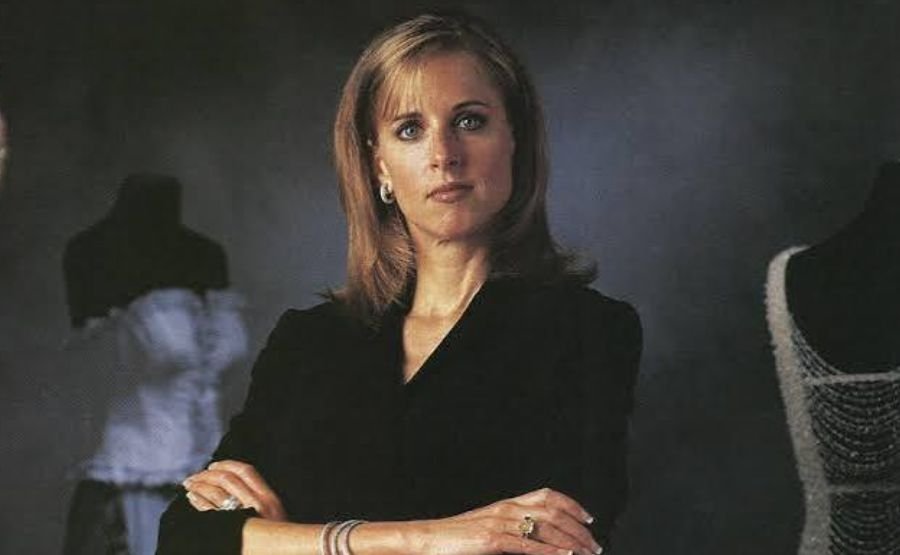
In the late 1990s, Susan Dell was already running a couture boutique in Austin’s Westlake area called simply “Susan Dell.” Texas Monthly ran a piece on it in August 2000 — one of the most vivid primary sources on her that exists — with the headline “Suddenly Susan” and a slightly arch tone throughout. The writer noticed that the elaborate door handle was forged in the shape of the boutique’s logo. That Austin women with money were driving to Dallas or Houston for couture before she opened. That the boutique’s aesthetic was “more in step with her hometown’s sensibilities” than Austin’s dressed-down culture at the time.
The Texas Monthly piece is careful. It describes her as “the wife of Michael” twice in the first paragraph. It notes she had been designing under her own name for six years before launching Phi. She was very much aware of the “wife of” framing — she said so herself. “Since the day Michael and I got engaged, I’ve been ‘the fiancée of’ and then ‘the wife of.'”
Then came Phi. New York, 2003. Luxury sportswear. Named after the golden ratio. A 10,000-square-foot penthouse showroom on Ninth Avenue in Manhattan, accessible through an “atmospheric freight elevator.” First designer, Tim Gardner — he left quickly. Second designer, Andreas Melbostad, a Norwegian who’d trained at London’s Royal College of Art and worked for Calvin Klein. Melbostad gave Phi its voice — minimalist, architectural, unexpected materials. Fashion insiders loved it. Beyoncé wore it. Rihanna wore it. The label developed what WWD called a “cult following” in the New York fashion scene.
And then, December 21, 2009, WWD published the item: Phi is closing. January. Done. Victim of the recession.
Here’s the thing about that closure. The company’s representative told WWD that Phi had had a “stellar” 2009. A stellar year. The recession excuse was real but also incomplete — what WWD’s Marc Karimzadeh actually wrote was that Phi was “so niche that its prospects became too restricted for the label to continue to be viable in the current financial climate.” The clientele was too small. The cult was real but not big enough.
Let’s be honest about the math here. Susan Dell’s husband was worth billions. She was running a fashion label that was critically acclaimed, celebrity-worn, and exquisitely produced — and it closed because it was too niche. Not because she couldn’t fund it. Because the market for that specific product, at that price point, with that particular identity, was limited. She made a commercially incorrect bet in a space she loved and it didn’t work. That takes something to admit.
See also “Is Bill Melugin Married: His Relationship Status and Personal Life“
The Ironman Question
In Kona, Hawaii, she participated in the Ironman World Championship.Multiple sources confirm this. She runs marathons. She’s been doing endurance events for years.
Nobody has asked the obvious follow-up: what are her actual times? Which age group is she competing in? Did she finish? Every profile says “she competed in the Ironman World Championship” and stops there, which in Ironman terms is a complete non-statement. Completing Kona is genuinely extraordinary for an amateur. Competing in Kona is very different from completing it in a competitive time.
What’s frustrating is that Ironman publishes all athlete times publicly and permanently. The data exists. Not one profile has looked it up. Instead, the athletic achievements get listed — marathons, triathlons, Ironman — and left there as proof of discipline, as character evidence, without any actual athletic specifics.
I’m not saying she isn’t genuinely impressive physically. The available evidence says she is. But the gap between what’s claimed and what’s documented is a feature of almost every category of her public biography.
The Foundation and What It Actually Did
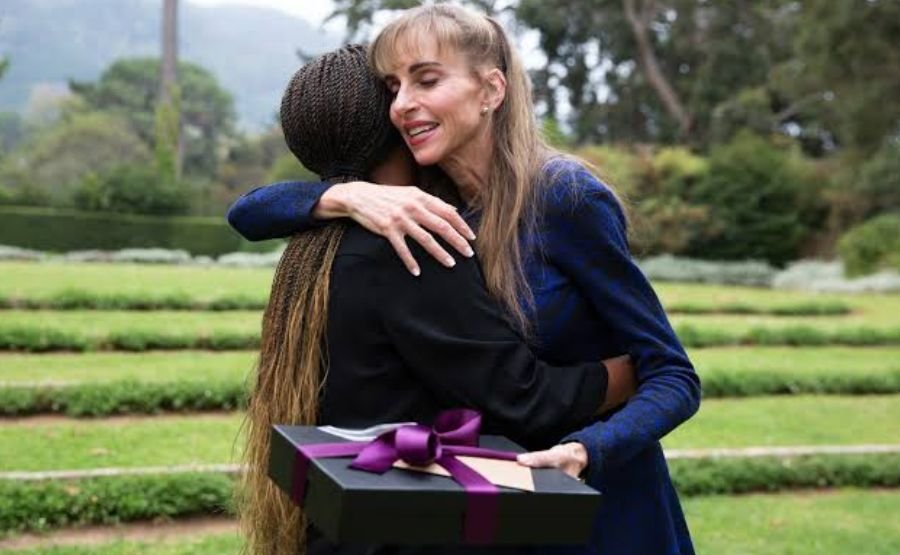
- Michael and Susan Dell co-founded the foundation. By December 2025, through the foundation and other charitable funds, their giving has topped $9 billion combined.
Let me restate that. Nine billion dollars in philanthropic commitments. Most of it focused on children’s education, healthcare for underserved kids, early childhood development in the US, India, South Africa, and elsewhere. The $2.9 billion through the foundation itself is documented and publicly searchable. The additional $6.25 billion pledge in December 2025 came from “other charitable funds” — not the foundation’s endowment, which has been separately built.
Susan explicitly drove the size of the December 2025 pledge. Texas Tribune reported that “Susan Dell said over time, they decided to increase the size of their commitment.” Michael Dell said they hadn’t initially envisioned committing so much. She pushed it larger.
That’s not something the “wife of” framing captures.
Now. The uncomfortable part. The pledge was made at the White House. The accounts are literally called “Trump Accounts.” The White House spokesperson Kush Desai called the Dell gift “the first of many announcements to come for America’s children.” Susan Dell stood there and said: “We want these kids to know that not only do their families care, but their communities care, their government, their country cares about them.”
One skeptical nonprofit watchdog site noted that when the pledge was announced, the Invest America account system wasn’t fully operational yet, and some details about administration remained unclear. That’s not a reason to doubt the pledge — the Dells confirmed it directly, the White House confirmed it, Reuters and NPR covered it. But it is a reason to note that a $6.25 billion commitment to a government program is simultaneously a philanthropic act and a very visible political alignment. The accounts bear the name of a sitting president. That’s a choice.
I’m not accusing Susan Dell of anything. I’m saying: this is the kind of nuance that the “inspiring philanthropist” coverage template erases.
The Net Worth Problem
Websites report Susan Dell’s personal net worth at $1.2 billion, $2.5 billion, $3.5 billion, and “not separately tracked.” All of these appear in distinct sources within the same month. The most honest answer — from BioHighLight, which actually researched this properly — is that “Susan Dell does not have a separately confirmed personal net worth, since most financial reporting groups her wealth together with her husband’s fortune.”
Michael Dell’s net worth is approximately $148-151 billion as of late 2025. That’s his stake in Dell Technologies plus other investments. Susan’s share of jointly held assets, trusts, and charitable vehicles is genuinely unclear from any public disclosure.
What we do know: she is personally wealthy by any reasonable standard. Her fashion ventures were funded out of real capital. Her foundation role is real. Her voice in the $6.25 billion pledge was real. Whether her personal figure is $2.5 billion or $5 billion is almost beside the point — what’s more interesting is that the disparity in estimates reflects how little of her financial identity exists independently of the Dell Technologies story.
She’s been trying to build that independent identity for thirty-five years. The fashion ventures were one attempt. The foundation chair role is another. The triathlon career is a third. The problem is that every time the coverage arrives, it starts with “wife of Michael Dell” and only reluctantly gets to anything else.
My Verdict
Susan Lieberman Dell has done more than survive the shadow of an extraordinary husband. She ran two fashion businesses — one of which attracted serious critical credibility and celebrity clients before the economics killed it. She chairs a foundation that has moved nearly three billion documented dollars toward children’s welfare over twenty-five years. She pushed a six-billion-dollar pledge over the finish line. She competes in Ironman events in her sixties.
The net worth figure is a rabbit hole that leads nowhere useful. The more honest question is whether the coverage has ever actually caught up with who she is. The answer, broadly, is no. Every profile either reduces her to “the wife” or overcorrects into “more than just the wife” — and both framings are still organized around Michael.
The fashion ventures failed commercially. The politics of the Trump Accounts are real and haven’t been fully reckoned with. The personal wealth is genuinely unclear. And none of that changes the fact that she’s been doing serious work, in her own way, for three decades in a family context that would have made it very easy not to.
FAQs
1. What is Susan Lieberman Dell’s net worth?
Not independently confirmed. Estimates range from $1.2 billion (shared with Michael) to 3.5billiondependingonthesource.NoindividualnetworthistrackedseparatelyfromthebroaderDellfamilyfortune,whichisprimarilytiedtoMichaelDell’sstakeinDellTechnologies(~148 billion).
2. Who is Susan Dell before she married Michael Dell?
Susan Lynn Lieberman, from Dallas. Her father was a surgical oncologist. She studied fashion merchandising at Arizona State University, then worked in commercial real estate for Trammell Crow Company in Austin before meeting Michael Dell in February 1988.
3. What happened to Phi, Susan Dell’s fashion label?
Phi closed in January 2010 after a December 2009 announcement. The label launched in 2003, developed critical acclaim and celebrity clientele, but was described as too niche to be commercially viable even in good times. The 2008–2009 recession accelerated the closure. The label’s representative said 2009 had been “stellar” for the brand — making the closure a market-size problem more than a quality problem.
4. What did Susan Dell do before Phi?
She operated “Susan Dell Inc.,” a couture boutique in Austin’s Westlake area, beginning in the late 1990s. Texas Monthly profiled it in August 2000. She had been designing under her own name for six years before launching Phi in New York.
5. What is the $6.25 billion pledge about?
In December 2025, Michael and Susan Dell pledged $6.25 billion from their charitable funds to seed “Trump Accounts” — tax-advantaged investment accounts established under Trump’s 2025 legislation — for 25 million American children aged 10 and under in ZIP codes with median income below $150,000. Susan Dell is explicitly credited with pushing the pledge to its final size.
6. Is Susan Dell really an Ironman triathlete?
Multiple credible sources confirm she has competed in Ironman events including the World Championship in Kona, Hawaii, and runs marathons. Specific times and placements are not documented in any profile or article.
7. When did Susan Dell meet Michael Dell?
February 1988, in Austin, Texas. A client at Trammell Crow introduced her to Michael Dell. Most credible sources confirm this date. One outlier source claims 1986, which appears to be an error.
8. How many children do Susan and Michael Dell have?
Four: Zachary, Alexa, Juliette, and Kira.
9. In reality, what is funded by the Michael & Susan Dell Foundation?
Children’s health, education, and family economic stability, primarily in the US, India, South Africa, and Israel. Since 1999 the foundation has committed approximately $2.9 billion. Susan Dell serves as Board Chair and has run the organization’s strategic direction for over twenty-five years.
10. Did Susan Dell really drive the $6.25 billion commitment to Trump Accounts?
Yes. Texas Tribune and other outlets reported that Susan Dell said the couple increased the size of their commitment over time. Michael Dell acknowledged they hadn’t initially planned to commit that much. The decision to expand the pledge is directly attributed to her.
11. Why does Susan Dell’s net worth vary so wildly across different sites?
Because no public document separately tracks her personal wealth. Sites are guessing, calculating shares of Michael Dell’s known holdings, or simply copying each other. The most accurate answer remains: unknown, but clearly substantial, and inseparable from the broader Dell family financial structure.
Uncover something new with every read at The Hidden Magazine.