Who Is Hugh Dillon Married To? Inside His Marriage, Wife, and Family Life
Every single article about Midori Fujiwara uses the word “supportive.” Supportive partner. Supportive role. Steady, supportive presence. Strong and supportive. She appears in the biographical record of her husband’s life as essentially a load-bearing wall — invisible, structural, and described purely in terms of what she enables rather than who she is.
Here’s the context those articles keep skipping: Midori Fujiwara married Hugh Dillon in 1997. Hugh Dillon was at that point already a functioning but struggling heroin addict who was also one of the most incandescently intense rock performers in Canada. The Headstones were at their peak. The tours were constant. By 2002, the relapse that would nearly kill him was coming. By 2003, he had hit a crisis so severe that the band dissolved and the people around him saw a life-or-death situation developing. She was with him through all of it.
That’s not “supportive.” That’s something requiring a different and harder word.
Quick Bio
| Detail | Info |
| Her name | Midori Fujiwara |
| Born | Unknown — estimated late 1950s to early 1960s |
| Birthplace | Believed Canadian; Japanese heritage implied by surname |
| Married | Hugh Dillon, 1997 |
| Marriage duration | 28+ years as of 2025 |
| Children | Maria Dillon, Peter Dillon, Annie Dillon |
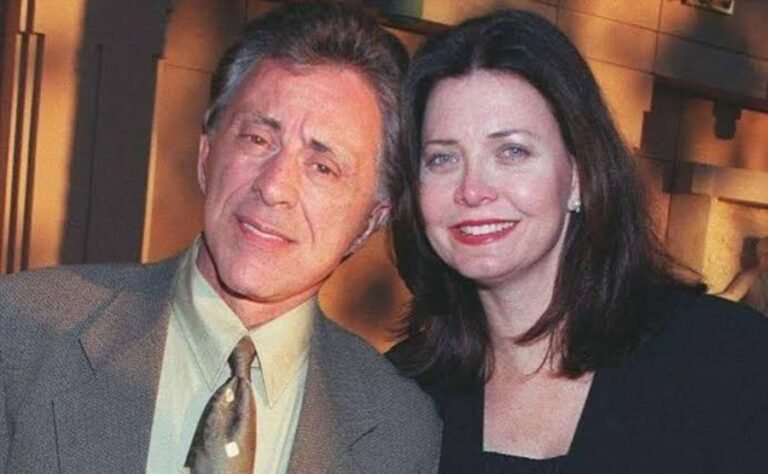
| Public presence | Extremely limited; photographed at TIFF 2017 with Hugh |
| Only primary source | 2008 Exclaim! interview: Hugh said “Midori, my wife” directly |
| Who is Hugh Dillon | Born May 31, 1963; lead vocalist of Headstones; actor/writer/co-creator of Mayor of Kingstown |
| Hugh’s addiction | Heroin; multiple relapses; near-fatal crisis 2002-2003; band dissolved partly as result |
The Problem With Everything Written About Her
There is one confirmed primary source for Midori Fujiwara’s existence in the public record: a 2008 Exclaim! questionnaire in which Hugh Dillon, answering a question about what he’d done the previous night, said he’d been watching television with “Midori, my wife.” One sentence. One proper noun. That’s the anchor of everything.
From this, the content farm ecosystem has produced articles describing her “quiet strength,” her “advocacy for mental health,” her “passion for cultural exchange,” her role as a “quietly influential figure,” and her deep commitment to “meaningful relationships.” One site says she was seen at TIFF 2017. Another says she was born in Canada. Another estimates her age as “late 50s or early 60s.”
Let me be direct about what we do not know: her age, her birth date, her birthplace, what she looks like beyond one photograph, what she does professionally, how she met Hugh, what their life looked like at the bottom. None of this is documented. What is documented is that she married him, stayed married, and has three children with him.
The content farms call this “quiet strength.” I’d call it a woman who has been invisible in the public record while her husband has been on one of the more remarkable career and recovery trajectories in Canadian entertainment.
See also “Mike Lindell Wife: Who Is She? Marriage History, Relationships, and Personal Life“
Who Hugh Dillon Actually Is
Headstones formed in Kingston, Ontario, in 1987. Hugh Dillon spent time in London before that — busking, squatting, being, as one article put it, “a true gutter punk.” By the early 1990s the Headstones were one of the most exciting live acts in Canada — raw, intelligent, genuinely menacing. They put out five studio albums. They toured relentlessly. Hugh Dillon was doing heroin.
The addiction ran through the entire arc of the Headstones era. Multiple relapses. Each tour cycle represented risk. By the time The Oracle of Hi-Fi came out in 2002, the people around him were watching a situation develop that could have ended one way or several bad ways. By 2003 the band dissolved.
He left. He got help. He told the Globe and Mail that he had to stop touring because every tour resulted in a relapse. A friend gave him a voiceover gig. That became more acting work. Acting replaced touring. Acting became the structure that sobriety could grow inside.
Now he co-creates and stars in Mayor of Kingstown, a Paramount+ drama built with Taylor Sheridan, drawn partly from growing up in Kingston — a prison town — and from his own darker history with addiction. He is, by the evidence of his current work, a fully realized person who nearly wasn’t.
Midori was with him from 1997 through all of it.

What 1997 to 2003 Actually Looked Like
Think about what it means to marry someone in 1997 who you probably understand is fighting a serious addiction. Hugh Dillon was not hiding his history — the music was about it, the interviews mentioned it, the tours generated relapses. You didn’t marry him in ignorance. You married him understanding that the man was brilliant and damaged and possibly dangerous to himself.
Maria, Peter, and Annie were presumably born across those years. The Headstones were touring. The crisis came in 2002-2003. The band broke up. Hugh was, by his own telling, “trying to save my own life, basically.”
What does a household look like during that period? What does a partner do when the person she married is fighting heroin while touring and while trying to be a father? The content farms say “supportive.” The word works as a placeholder for an experience that is genuinely hard to describe without knowing more than the public record offers. She didn’t leave. She helped. Whatever “helped” meant in the specific daily texture of those years is not documented and probably never will be.
The Japanese Surname Nobody Explains
Fujiwara. It’s a Japanese surname. One of the oldest and most prominent family names in Japanese history. Most biographical sites say Midori was “born in Canada,” which would make her Japanese-Canadian. No source gives her parents’ names or background. Nobody specifies.
How did they find each other? What were the social circles where a Japanese-Canadian woman and a recovering punk addict from Kingston crossed paths in the mid-1990s? What did her family think about her marrying into this? None of this is in the record. All of it would make a more interesting biography than “supportive partner committed to quiet dignity.”
The TIFF 2017 Photograph
The only confirmed public appearance in the research. The Toronto International Film Festival, 2017. She was photographed with Hugh. He was promoting something. She was there with him.
That’s the record. One festival. One photograph. In 28 years of marriage. That’s not shyness — that’s a sustained, consistent, probably deliberate choice to stay out of every public space her husband occupies. Hugh Dillon does interviews. He’s done lots of them. He talks about addiction recovery, about the Mayor of Kingstown, about the Headstones. He mentions family in general terms. He credits his family with helping him survive. He has said the word “Midori” publicly exactly once in the confirmed primary record.
She is the most successfully private person I’ve researched in a long time of writing about this subject.

My Actual Judgment
Hugh Dillon is married to a woman named Midori Fujiwara who has been his wife since 1997, survived the worst years of his addiction with him, raised three children with him, and has maintained one of the more complete disappearances from public life I’ve encountered while researching this series of articles.
The content farms say “supportive” because they need a word and they don’t have information. The word is probably accurate. What it undersells is the specific shape of that support — a woman who stayed through a near-death heroin addiction, who kept the household functional while the man she married was on tour relapsing and then off tour trying to reassemble himself, who raised kids in all of this.
That’s a real biography. It’s also one that Midori Fujiwara has never offered the public and doesn’t appear interested in offering. Every piece written about her has constructed a character from the absence — the “quiet strength,” the “calm presence,” the “meaningful life away from the spotlight.” Maybe all of that is accurate. Maybe she really is exactly as serene as the profiles imply. I have no way to know, and neither does anyone writing those profiles.
What I know is that Hugh Dillon is alive and working and making serious television, and he credits his family with that, and Midori Fujiwara is the person who has been his family. That’s the actual story. Everything else is filler.
Hugh Dillon is 62 years old, sober, making television at the highest level of his career, with three kids and a marriage that has lasted nearly three decades through things that would have ended most marriages. Midori Fujiwara did that with him. She is more than the one sentence he gave a magazine in 2008. She’s just not going to tell us what the more is.
FAQs
1. Who is Hugh Dillon married to?
Midori Fujiwara. They married in 1997. He confirmed her name in a 2008 Exclaim! magazine questionnaire — the only primary source establishing her identity publicly.
2. How long have Hugh Dillon and Midori Fujiwara been married?
Since 1997 — 28 years as of 2025. They married during the peak years of the Headstones, when Hugh was still actively touring and struggling with addiction.
3. Who is Midori Fujiwara?
Almost nothing is documented. She is believed to be Canadian, of Japanese heritage. Her birth date, birthplace, family background, and professional life are not documented in any public source. She was photographed at TIFF 2017 with Hugh. She has given no interviews.
4. Does Hugh Dillon have children?
Yes. Three: Maria Dillon, Peter Dillon, and Annie Dillon. Their ages and birth years are not documented.
5. Did Hugh Dillon’s wife help him with his addiction recovery?
Hugh has publicly credited his family with helping him survive his addiction. The specific details of how that support worked during his worst years are not in the public record.
6. What was Hugh Dillon’s addiction?
Primarily heroin. He has discussed this openly in multiple interviews. The 2002-2003 crisis was near-fatal by multiple accounts. He left the Headstones because touring reliably caused relapses.
7. Why did the Headstones break up?
Multiple factors, but Hugh Dillon’s heroin addiction was central. The band dissolved in 2003, with Dillon later saying each tour resulted in a relapse. The band reunited for their 25th anniversary.
8. How did Hugh Dillon get into acting?
A friend gave him a voiceover gig after he left the Headstones. Acting provided structure that supported sobriety, replacing touring. His career grew from there to Flashpoint, Durham County, Yellowstone, and Mayor of Kingstown.
9. Is the Mayor of Kingstown based on Hugh Dillon’s life?
Partially. He grew up in Kingston, Ontario — a city with several prisons — and drew on that background plus his experience with addiction when pitching the show to Taylor Sheridan. He stars as Detective Ian Ferguson and is a credited co-creator, executive producer, and writer.
10. Does Midori Fujiwara have a career?
Not documented in any public source. Some sites describe her as having interests in arts or advocacy but provide no specifics.
11. Where does Hugh Dillon live now?
Toronto, Canada, based on multiple interview references throughout his career.
Uncover something new with every read at The Hidden Magazine.