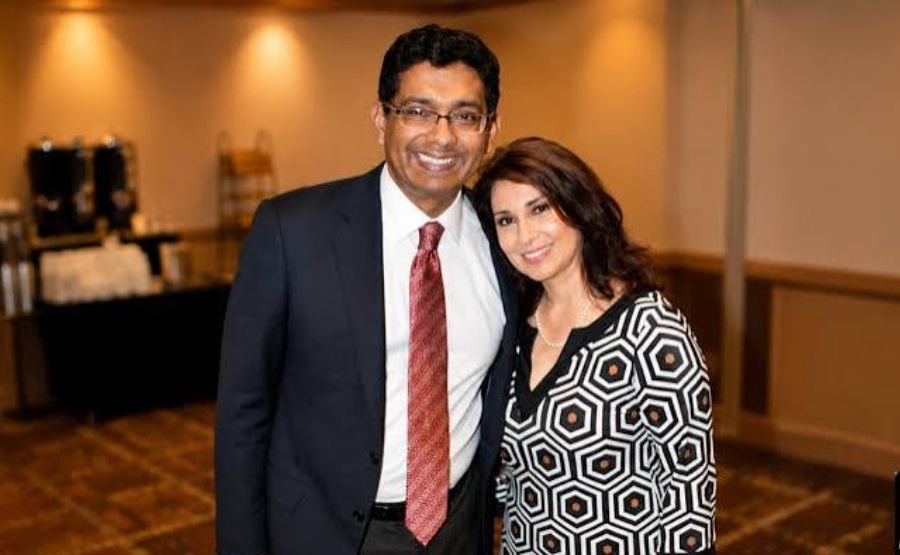
Dixie Brubaker Biography: Age, Family, Marriage, Career, and Personal Life
Here’s the thing nobody leads with when they write about Dixie Brubaker: she didn’t become notable for anything she did. She became notable because a man she spent twenty years building a life with decided to lie about her — in a federal court filing, of all places — and she wasn’t willing to just let it sit there.
That’s the story. Not the marriage. Not the divorce. The letter.
Everything else is prologue.
Quick Bio
| Detail | Info |
| Full name | Dixie Brubaker |
| Birth year | Approximately 1969–1970 (not publicly confirmed) |
| Known for | Former wife of Dinesh D’Souza; author of a scorched-earth letter to a federal judge |
| White House connection | Intern, Reagan-era Office of Political Affairs |
| Marriage | Dinesh D’Souza, 1992 |
| Separation | Circa 2010 (circumstances disputed) |
| Divorce filing | October 2012 |
| Children | One daughter, Danielle D’Souza Gill (b. ~1995) |
| Current life | Private; California; no verified public presence |
| Net worth | Not established publicly |
| Career | Reportedly co-founder/business development at Planet H2O, LLC; details sparse |
She Was There Before He Was Famous
Let’s be honest about how most of these “celebrity ex-wife” profiles work. They use the lady to set the scene for the man.Meet-cute, ring, babies, tragedy. Close with her current Instagram handle if she has one. Done.
Dixie Brubaker doesn’t have a verified Instagram. So most articles just sort of trail off.
But go back to 1992 and something more interesting appears. Dixie wasn’t a political civilian who happened to fall for a public intellectual. She had her own Washington connection — she was an intern in the White House Office of Political Affairs during the Reagan years, reportedly still attending graduate school when she and D’Souza crossed paths. That detail gets one line in most bios, then gets dropped entirely.
Think about what that means. The Office of Political Affairs wasn’t a PR internship. It was the nerve center of how the Reagan administration managed its relationships with Congress, governors, and party machinery. Young people who worked there were, by definition, politically motivated, ambitious, and ideologically committed. Dixie Brubaker chose that environment. She didn’t wander into it.
D’Souza, for his part, had served as a policy adviser in the Reagan White House between 1987 and 1988. So this wasn’t a case of a private person swept up in a famous man’s orbit. This was two people who shared a particular world — Reaganite conservative Washington — finding each other inside it.
That matters later. Because when Dinesh would eventually frame the divorce in ways that cast Dixie as an afterthought, a supporting character who “demanded” separation before he could pursue his real life, it’s worth remembering: she was already there when they met. She had a place in that world. And she gave up a significant amount of her own public-facing potential to spend twenty years raising a daughter while her husband became increasingly prominent and increasingly absent.
See also”Naomi Sablan Biography: Age, Husband, Career, Family, and Net Worth“
Twenty Years Is a Long Time to Be Invisible
They married in 1992. Danielle D’Souza was born around 1995. For nearly two decades, Dixie Brubaker is essentially a ghost in the public record. Dinesh is writing books, doing debates, building a media profile. Becoming the face of a certain strain of conservative intellectual commentary. His name is on bestseller lists. He’s at conferences. He’s arguing with Christopher Hitchens.
Where’s Dixie? Home. Raising their kid. In California. That’s exactly what happened; it’s not a criticism.
At some point — and nobody outside the marriage can tell you exactly when or why — something broke. D’Souza’s public account, given after everything became news, says Dixie “approached him and demanded” a separation before he took the presidency of The King’s College in New York in August 2010. He moved to New York. She stayed in California.
I want to sit with that version for a second, because it’s doing a lot of work. In D’Souza’s telling, he’s essentially the reluctant party who honored his wife’s wishes and moved on. He positions himself as a man caught between a marriage his wife ended and a new relationship he’d begun in good faith. He told Christianity Today he “had no idea” that in Christian circles, being engaged while still legally married was considered wrong. He claimed to have “strong biblical grounds for divorce.”
Sure. Let’s call that Version A.
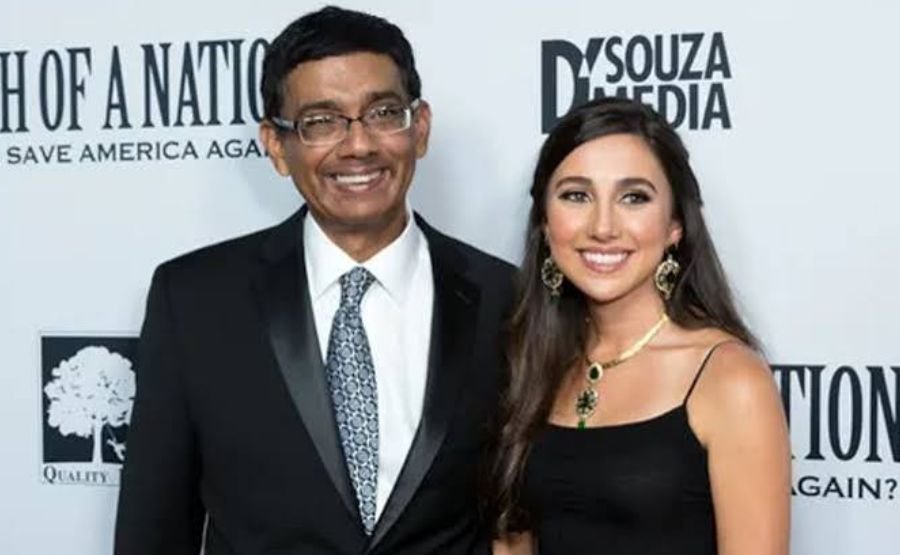
What the Court Records Actually Showed
Version A ran into a problem pretty quickly, which was the court records.
World magazine reporter Warren Cole Smith confronted D’Souza on October 4, 2012 — the same day, per San Diego County Superior Court records, that D’Souza filed for divorce. Not a few weeks earlier. Not “several weeks prior” as D’Souza later claimed. That same day.
D’Souza had appeared at a Christian apologetics conference in Spartanburg, South Carolina the weekend of September 28, 2012. He brought a woman named Denise Odie Joseph II and introduced her to conference organizers as his fiancée. Both of them were legally married to other people at the time. A conference organizer was disturbed enough to confront D’Souza directly. D’Souza acknowledged sharing a room with Joseph but said “nothing happened.”
When Smith asked D’Souza when he had filed for divorce from his wife, D’Souza answered: “Recently.”
That’s technically accurate, I suppose, if your definition of “recently” includes “literally today, after you called me.”
D’Souza resigned from The King’s College two days later. He blamed the exposé on a “vendetta” from World editor Marvin Olasky, who had served as the college’s provost before D’Souza was hired as president and had resigned shortly after. Maybe there was a vendetta. People in conservative media have grudges like anyone else. That doesn’t mean the facts reported were wrong.
The Marriage Narrative Has a Hole in It
Here’s something that gets skipped in almost every account: there are two very different versions of what happened to this marriage, and only one of them comes from someone with no legal motive to shape the story.
D’Souza’s version: Dixie demanded separation, he complied, they had effectively been finished for two years before any of this became public, and she was — in his framing — possibly the one who had been unfaithful.
Dixie’s version: see the federal court letter.
She didn’t give interviews. She didn’t go on Fox News. She didn’t tweet. What she did, in September 2014, was write five pages to U.S. District Judge Richard Berman in Manhattan, who was about to sentence Dinesh D’Souza for federal campaign finance fraud — a crime D’Souza had pleaded guilty to, involving illegal straw donations to a Republican Senate campaign.
She opened quietly and then didn’t stay quiet: “I know Dinesh better than anyone and can attest to his flawed character and lack of truthfulness.”
She told the judge that D’Souza’s sentencing memorandum contained “false and misleading” characterizations of her, of the nature of his criminal conduct, and of his relationship with their daughter Danielle. She claimed that the purpose of her letter was to “correct the record.”
She ended by trusting the court to impose a “fair, appropriate and just sentence.” Which is a polite way of saying: don’t let him off easy.
D’Souza’s lawyer called the letter 90 percent “patently false.” When D’Souza began addressing Dixie’s allegations during his pre-sentencing statement, his attorney stopped him. The judge — who had already dismissed D’Souza’s claims of selective prosecution as “all hat, no cattle” — had read every word of Dixie’s letter. The courtroom read it aloud.
D’Souza received five years’ probation, eight months in a community confinement center, a $30,000 fine, and mandatory community service. He went on television afterward and said he had “a big smile on my face.”
The allegations in Dixie’s letter — which one legal commentator called “troubling, to put it mildly” — were never separately adjudicated. They were a private citizen’s account, submitted to a federal proceeding, disputed by D’Souza’s side, and then largely buried by the media. One outlet covering the Indian-American political sphere noted in passing that D’Souza’s ex-wife “would later accuse him of physical abuse.” That’s a serious allegation. It appeared in a court context. It was publicly disputed. And somehow the main storyline became whether D’Souza was being politically prosecuted.
The Pardon, and a Second Look at the Letter
Trump pardoned D’Souza in May 2018. D’Souza reacted by retweeting Trump’s announcement and promoting his new movie. Then said thanks.
Law and Crime re-surfaced Dixie’s court letter at that moment. Because here was a man receiving a presidential act of grace, holding himself out as a martyr of the Obama administration, and there existed this document — this five-page document — in which his ex-wife of more than twenty years had gone on record with a federal judge saying she could personally attest to his “flawed character and lack of truthfulness.”
The pardon wiped the felony conviction. It didn’t change what was in that letter.
And Dixie, as far as anyone can tell, said nothing. No press release. No statement. No book deal. She’d had her moment of public record in 2014, aimed it at the one venue that counts for something, and then went back to being Dixie Brubaker, private person, California.
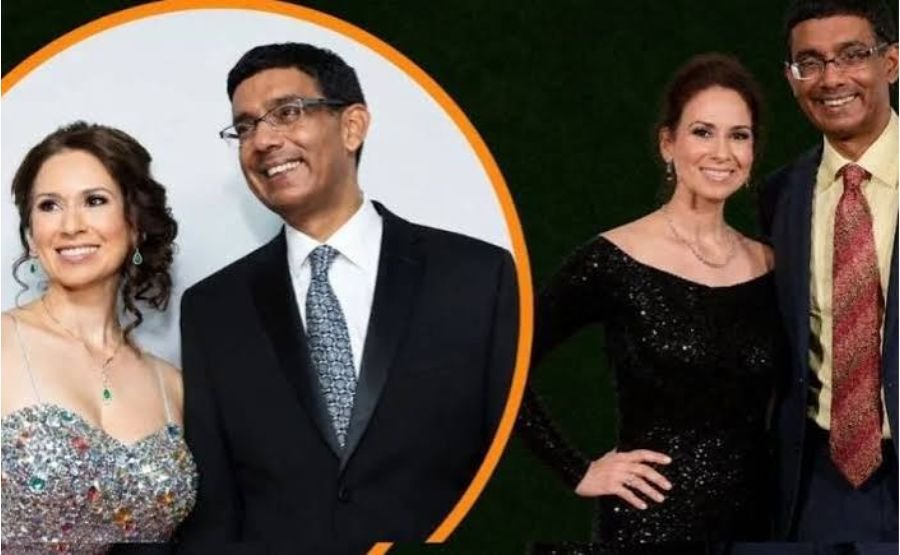
The Daughter Piece Is Complicated
Danielle D’Souza Gill is now a conservative author and speaker in her own right, married to Brandon Gill, a Texas Republican congressman. She wrote a letter to Judge Berman in support of her father at sentencing, describing the divorce as a stressful period and noting that the campaign finance violation came shortly after her parents separated.
Dixie, in her letter, specifically disputed D’Souza’s characterizations of his relationship with Danielle.
I’m not going to speculate about what went on inside that family. But I will say this: it takes a particular kind of certainty to walk into federal court proceedings — not as a party, not as a witness under subpoena, just as a private citizen who is done staying quiet — and contest, on the record, the narrative your ex-husband has presented to a judge. It’s not something you do lightly. It’s not something you do to win a news cycle. There’s no upside. There’s only the record.
Dixie went to the record.
What We Don’t Know, and What That Costs
The honest answer to “who is Dixie Brubaker” is: we don’t know much. Her exact age is unconfirmed. Her current professional life is murky — one source mentions Planet H2O, LLC, a water-focused media company, in a business development capacity; I can’t confirm that from primary sources. Her precise relationship with her daughter today is unknown. Whether she’s aware of the small industry of content-farm profiles built around her name is unknown.
Almost all of those profiles are junk. They’ll tell you she was “born in the early 1970s” and has “strong Christian faith” and “prioritizes family over fame.” These are not facts. These are assumptions dressed up in biographical form, padding thin sourcing with adjectives until it sounds like a profile. I’ve seen at least four separate sites claim she “exemplifies how dignity and faith can sustain a person through life’s transitions.” That’s a sentence a machine wrote, not a person.
She’s not a brand. She’s not a story arc. She’s a person who got caught in someone else’s public life, pushed back once in a very specific and documented way, and then left.
Final Words
Dixie Brubaker is not the real subject of any article about Dixie Brubaker. She’s the negative space around Dinesh D’Souza’s self-image — the part he had to characterize, minimize, and position in order to tell the version of his life that serves his purposes.
What makes her interesting, to me, is the letter. Not because it “destroyed” him or changed his trajectory — it didn’t, particularly. But because she had every reason to stay silent, and some reasons to be afraid, and she went to a federal judge anyway and said: this is who this man actually is, and I watched it up close for twenty-six years.
That’s not a victim speaking. That’s a witness.
The media mostly wanted to cover D’Souza’s selective prosecution theory and the political theater around a conservative being charged during the Obama years. The ex-wife’s five pages got a paragraph in most outlets and then disappeared.
She’s still in California. D’Souza has a second wife and a continuing media career and a presidential pardon. He still appears at conferences and says things like “I am not a victim.” Dixie Brubaker said what she had to say to the one venue that matters — a court of law — and then went quiet.
I don’t know if that’s dignity or defeat or something in between. But I know it’s not the story most people are searching for when they type her name. They probably should be.
FAQs
1. Who exactly is Dixie Brubaker
She’s an American woman who interned in the Reagan White House Office of Political Affairs, met Dinesh D’Souza in that same political world, married him in 1992, raised their daughter Danielle in California, and divorced in 2012. She is not a public figure in her own right and hasn’t tried to become one.
2. Why did Dixie Brubaker and Dinesh D’Souza get divorced?
The official story is genuinely contested. D’Souza claims Dixie demanded a separation in 2010 before he took a job in New York. Court records show D’Souza filed for divorce on the same day a magazine reporter confronted him about introducing another woman as his fiancée at a Christian conference. Dixie disputed D’Souza’s account in court filings. We don’t have her full version on the record.
3. What did Dixie Brubaker’s letter to the judge say?
She told U.S. District Judge Richard Berman that she knew Dinesh “better than anyone” and could attest to his “flawed character and lack of truthfulness.” She said his sentencing memorandum contained “falseand deceptive” depictions of her, his illegal behavior, and his bond with their daughter.She asked the court to impose a fair and appropriate sentence — which, translated, meant: don’t let him skate.
4. What happened with D’Souza’s criminal case?
He pleaded guilty in 2014 to federal campaign finance fraud — illegal straw donations to Republican Senate candidate Wendy Long’s campaign in New York. He was sentenced to five years’ probation, eight months in a community confinement center, a $30,000 fine, and community service. Trump pardoned him in 2018.
5. Did Dixie Brubaker accuse D’Souza of abuse?
Allegations to that effect appeared in the sentencing proceedings. D’Souza’s legal team called them “patently false.” The allegations were not adjudicated in any separate legal proceeding visible in public records. Anyone summarizing this point flatly in either direction is getting ahead of the evidence.
6. What is Dixie Brubaker doing now in 2026?
Nobody reliably knows. She lives in California, has no verified public social media presence, and has given no interviews. Some sources mention a role at a water-focused media company. None of this is confirmed from primary sources. If she wants you to know, she’ll tell you.
7. What is Danielle D’Souza Gill’s relationship with her mother?
Danielle wrote a letter supporting her father at sentencing. Dixie’s court letter disputed D’Souza’s characterizations of his relationship with Danielle. The dynamics of that family are private and we don’t have real information beyond those two documents, which point in different directions.
8. What was the Christian conference incident in 2012?
D’Souza appeared at a Christian apologetics conference in Spartanburg, South Carolina in late September 2012, accompanied by a woman he introduced as his fiancée — while still legally married to Dixie. Conference organizers were disturbed and confronted him. World magazine broke the story. D’Souza resigned from The King’s College presidency within two days.
9. Why did D’Souza say Dixie demanded the separation?
He said it publicly in October 2012 to establish that the marriage was effectively over before he began his relationship with Denise Joseph — a framing that preemptively defended against any infidelity charge. Whether this framing is accurate is disputed. Court records about the divorce filing timeline undermined other parts of his public account.
10. Did Laura Ingraham have a history with D’Souza?
Multiple sources confirm Ingraham dated D’Souza before he married Dixie. She wrote a support letter for D’Souza at his 2014 sentencing. That’s not a scandal — people date, people move on — but it’s a detail that tends to quietly disappear from the version of this story that centers D’Souza as an impartial observer of his own life.
11. Why is there so little reliable information about Dixie Brubaker?
Because she hasn’t provided any. She’s not on social media. She doesn’t give press interviews. She hasn’t written a book. The biographical information online is largely manufactured by content farms making assumptions from thin primary material. The only thing she’s directly put on record is a five-page letter to a federal judge, and even that is hard to find in full. If you want to understand her, start there.
Uncover something new with every read at The Hidden Magazine.


One Comment